


Driven by Purpose: An Entrepreneur’s Mission to Advance Solutions for the IBD Community
Published: December 2, 2025
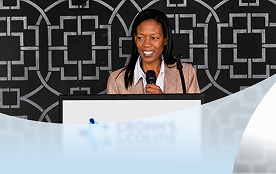
After an unexpected ulcerative colitis (UC) diagnosis, Crohn’s & Colitis Foundation National Board Member John Capodilupo turned his personal experience into fuel for his entrepreneurship, innovation, and leadership in the inflammatory bowel disease (IBD) community.
Learn more about his career as co-founder and CTO of Whoop, where he pioneered the health wearables movement and his next venture, Throne, a toilet-mounted device with the potential to help those with IBD better understand and live well with their disease.

You have a great entrepreneurship story. What first got you interested in your work at Whoop measuring health biomarkers?
I dropped out of Harvard my sophomore year to co-found Whoop, one of the first wearable fitness trackers to monitor sleep, strain, and recovery. Becoming an entrepreneur wasn’t my plan; I thought I’d follow my dad and grandfather into academia. But when Will, Whoop’s CEO, approached me with the idea, I got excited.
Through conversations with my dad, an anatomy professor, I understood how little data we have about the body. Giving people continuous vital-sign data felt groundbreaking. As we built Whoop, we saw how powerful daily measurement could be. With sleep and recovery data collected every day, not just once a year at the doctor, you can understand the body in a completely different way.
You were diagnosed with ulcerative colitis a few years into this work. Did the diagnosis come as a surprise?
I was diagnosed with ulcerative colitis in 2016. Before that, I was a healthy young adult. I remember getting a burger during the Red Sox opening day game, and later that night, my stomach felt off. The next day, the stomach upset didn’t go away. Four days later, I was still having diarrhea and then blood in the stool. I was going to the bathroom 12, then 30 times a day. It progressed like crazy.
A few weeks later, after a colonoscopy, I was officially diagnosed. I was hospitalized for nearly a month and lost 60 pounds. It was a rough introduction to UC and felt like it came out of the blue.
What was it like finding the right treatment?
Between my dad’s physiology background and my mom being a nurse, they knew what to do better than I did. I ended up at Massachusetts General Hospital and am thankful to all the nurses and doctors there. I started on Lialda, but after more flares, I moved to biologics.
What motivated you to channel your IBD experience into your work with Throne?
At Whoop, we gave people longitudinal data—heart rate, sleep, recovery—and uncovered surprisingly powerful insights. During COVID, we even showed that nightly respiratory rates could help detect potential infections.
Around the same time, I was navigating UC medications and wondering, “Is this really going to work for me?” Clinical evidence says 30–40% of people respond, but you don’t know if you’re one of them. That lack of data inspired me. Experiencing firsthand how many simple questions we can’t answer about IBD made me want to bring more data to the field.
Tell us more about Throne and the toilet-mounted device you're developing.
Throne is a toilet-mounted device that tracks key digestive and hydration patterns. These insights may be especially valuable for people with IBD, helping them understand day-to-day changes. It blends my experience at Whoop with my perspective as an IBD patient.
The device automatically logs stool frequency, consistency, and key biomarkers. For people with IBD and anyone curious about their gut-health, this matters. No constant monitoring, remembering to write insights down, or going to a doctor's office.
It also helps users understand their personal “normal.” With IBD, there’s often a recency bias. Maybe the last two weeks look fine, but an eight-week trend shows things aren’t. Surfacing those patterns can offer early warning signs and improve confidence and control.
Can you share more about how you got connected to the Foundation and what excites you most about your work as a Foundation board member?
When I was hospitalized, I went online and discovered the Foundation’s Take Steps fundraising walk. The day I got released from the hospital was the day of my local walk, so I went.
Now, I’m the chair of the Strategic Oversight Committee, which guides the Foundation’s strategic plan. This year, we implemented a new plan, and it’s exciting to help shape the roadmap for the next four years.
You’re now a decade into your journey with IBD. Any advice for folks who may be newer to their journeys?
There will be good days and bad days. Enjoy the good days, and advocate for yourself when you need to rest.
When I was diagnosed, I was scared my life would change and that I couldn’t be an entrepreneur anymore. Part of my advocacy now is being open about my IBD to show that living your dreams is still possible. It can be hard, but it’s absolutely achievable.
Also, get involved with the Foundation. It’s an amazing way to support people with IBD and move towards a cure. The Foundation has many resources, as well.