


Let’s Go There: What it’s Like to be a Gastroenterologist With Crohn’s Disease
Published: November 20, 2025
Meet my Dad: A GI Doctor With Crohn’s Disease
Many people at the Crohn’s & Colitis Foundation have a personal connection to the cause. It gives our work a special purpose. My “why” is my dad.
He’s a gastroenterologist who also lives with Crohn’s disease. When he was diagnosed, well into his career, it was hard to believe he was suddenly facing the same illness he treats. His dedication to his patients has always inspired me. Now, so does his honesty about life with Crohn’s. Hear it in his own words.
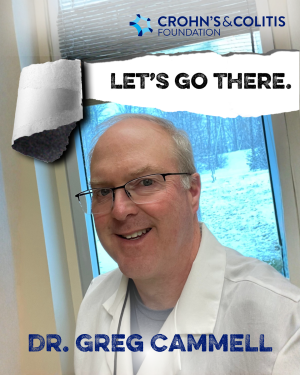
You’ve been a gastroenterologist for almost 30 years. What first drew you to the specialty and where are you in your career now?
I initially considered surgery, but during a rotation, I worked with a surgeon who performed endoscopies that could detect and prevent cancer. Then, a month-long gastroenterology rotation in my senior year of medical school sealed it. I loved the mix of connecting with patients and performing procedures that have a real impact.
I spent most of my career in private practice and now work for the Department of Veterans Affairs. My patients have made tremendous sacrifices for the country, and it’s been rewarding to care for this community and give back.
You were diagnosed with Crohn’s disease nearly 10 years ago. What was that diagnosis like for you?
It was a moment of stark disbelief when I was having my first colon cancer screening colonoscopy in 2016. I chose not to be sedated so I could watch the procedure. As soon as the scope reached the ileum, I saw ulcerations and knew the diagnosis. I was shocked because I expected to have been more symptomatic.
Were you able to retroactively look back and identify symptoms?
Yes. I’d had pain, fatigue, and diarrhea, but always found other explanations. No one in my family has Crohn’s disease or ulcerative colitis, either.
Why Empathy Matters in Medicine
Did your diagnosis bring a new perspective to your work, and did you share your diagnosis with colleagues?
At first, I avoided discussing it at work, because I worried it might affect opportunities for advancement. I didn’t want to be seen as unreliable because of an unpredictable illness. Medicine is an interesting profession. We're dedicated to healing others, but historically there's been a culture of deprioritizing our own health in the process. Things are changing, but I came up in a professional culture that didn't always feel like it valued our humanity.
Over time, I realized I had an opportunity to show people that IBD isn’t the end of the world. I share my experience with patients who are struggling, especially those hesitant about starting biologics. I understand their fears around autoimmune risks, infections, or needles—I went through the same deliberations. When it comes to injections, I can reassure them: I manage it, and I’m not particularly brave.
How do you usually approach these conversations with patients who have IBD?
IBD varies widely, so while I can relate, I never assume my experience matches theirs. My goal is to help people make informed decisions by sharing the scientific data behind my recommendations. If they have concerns, it’s not personal. I want them to feel comfortable, and I welcome second opinions—medicine is a team sport.
As a patient myself, I also understand how frustrating it can be to wait for answers. I try to get back to my patients quickly because IBD is a disease that often requires decisive action. People are suffering, and I feel like I’ve been given an incredible gift to help alleviate that suffering, if not remove it. It’s an important responsibility that I take seriously.
Navigating Daily Life and Finding Hope With IBD
Do you have advice for others navigating high-pressure careers and IBD?
Fatigue can be a problem for a lot of people with IBD. I used to have a pretty intense schedule, and I've tried to pare it back because sleep affects inflammation, which is something I need to manage with IBD.
Really, acceptance is key. Accept your limitations and don’t be afraid to look for workarounds. If you’re a leader, delegate so you don’t have to stay up all night. You need sleep. And then keep compassion for yourself, just like you would extend to others. You never know what’s going on inside for other people.
People might think as a doctor that you have all the answers, but you’re at a point in your Crohn’s journey where you’re still figuring out what treatments and medications are right for you. How do you stay hopeful and motivated?
My faith is important to me. It’s not easy to feel out of control, so it helps me stay hopeful when my health feels out of my hands.
Also, I see the amount of research that’s being done, much of it supported by the Crohn’s & Colitis Foundation, and that’s exciting. I’m happy to say I was a professional member of the Foundation even before my diagnosis. In the last twenty years alone, so much has been discovered about IBD—it’s unbelievable. I think about where we’ll be twenty years from now. Hopefully, we’ll have a cure.