




One Standard of Care for All–Dr. Sadye Curry’s Impact on IBD
Published: March 28, 2025
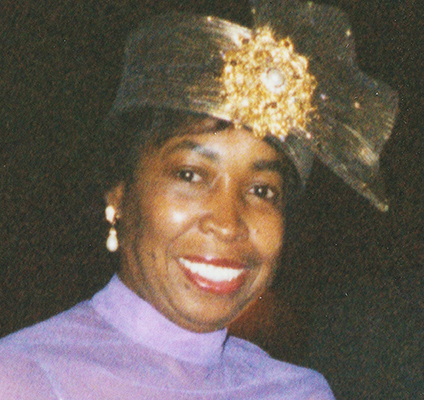
Every December, Dr. Sadye Beatryce Curry took joy in selecting beautifully designed holiday cards for the patients of her gastroenterology practice. She hoped the gesture would convey to patients that they mattered.
Dr. Curry had a hard-earned and illustrious medical career, marked by prestigious leadership positions and accolades, including a Crohn’s & Colitis Foundation Excellence in Medicine Award in 2022. Still, her personal investment and thoughtfulness were just as central to her legacy.
Now retired, Dr. Curry was asked to offer guidance to practicing doctors and shared: “I would like them to always remember that the patient is foremost, and I would like them to always enjoy the art of medicine, which is not just reading about medical diseases but also hands-on patient care.”
In 1972, Dr. Curry became the first Black female gastroenterologist in the United States. She was resolute in breaking through barriers to ensure that her patients had access to medicine that centered their personhood, and she didn’t stop there—she held the door open for other women to follow.
An intense desire to help the sick
Born in 1941 in Reidsville, Ohio, Dr. Curry’s first memories of wanting to be a doctor date back to elementary school. She was motivated by “an intense desire to help the sick.”
Dr. Curry deeply admired her older brother as she watched him attend medical school. She eventually followed in his footsteps, attending Howard University College of Medicine in 1963 after earning her undergraduate degree at Johnson C. Smith University. She continued her training at Duke University Medical Center, becoming the first Black woman postgraduate trainee and the first Black trainee in the gastroenterology program.
Among Dr. Curry’s many achievements, she served on national committees that helped shape the field, such as the National Institutes of Arthritis, the Metabolic and Digestive Diseases Training Grants Committee in Gastroenterology, and the Food and Drug Administration’s Drug Advisory Committee. She was also the first woman to chair the National Medical Association’s internal medicine division, and she founded the Leonidas Berry Society for Digestive Diseases to support people of color with careers as scientists, surgeons, and gastroenterologists.
A legacy of holding doors open
Women are historically underrepresented within medical subspecialties. More than 82% of practicing gastroenterologists are men, and there is an even higher gender gap among those holding leadership positions.
Dr. Curry noted, “One cannot go through life without facing obstacles of various types. We have to remain focused, barrel over the obstacles, see the light at the end of the tunnel, and by the Grace of God, keep moving.”
Valuing the role of mentors in medicine, Dr. Curry joined the faculty of Howard University in 1972. She rose through the leadership ranks, eventually holding the respected title of associate professor of medicine.
While at Howard University, Dr. Curry nurtured a lineage of female gastroenterologists who have carried on her legacy of patient-centered care, including two doctors who also went on to receive the Foundation’s Excellence in Medicine Award: Dr. Debra Ford, a colorectal surgeon, Senior Associate Dean for Academic Affairs; and Dr. Patricia Turner, a faculty member of the University of Chicago School of Medicine, Executive Director and CEO of the American College of Surgeons (ACS).
Reflecting on her career, Dr. Curry said, “I am proud to have had the opportunity to teach medical students, interns, and residents the fun and the beauty and the art of medicine. I hope that I served as a good role model for women in medicine. I am very proud of the fact that I demonstrated one standard of care for all patients, whatever their status in life.”
You can make an impact on IBD cures! Please consider donating to the Crohn’s & Colitis Foundation.