IBD Patients Can’t Wait and Neither Should Lawmakers
Published: September 10, 2025
Most people do not think about what they need until it is urgent. At eleven, living in constant pain, I needed a diagnosis. My doctor suspected Crohn’s disease, and the only way to confirm it was through a capsule endoscopy of my digestive tract. Before I could have that procedure, insurance required me to first get an MRI, even though my doctor knew it would likely show nothing. The wait for each appointment stretched on, week after week, while my health declined. Each step added another delay, another round of waiting rooms, another reminder that the system valued procedure over urgency. Because the system left us no choice, what could have taken weeks dragged into months, when what I needed was care wthout delay.
That same urgency has followed me ever since. I have felt it in waiting for the right medication, in navigating rules that never move as quickly as my illness demands, and in the constant uncertainty of when or whether support will be there. These circumstances are slowed by systems built for paperwork and protocol, not for people whose health depends on speed.
In New England, whether someone with IBD can use a bathroom in a moment of urgency often depends on luck. Only Massachusetts, New Hampshire, and Maine have bathroom access laws, and even those come with strict requirements, some including a diagnosis, a doctor’s note, and a business with at least three employees. Vermont, Connecticut, and Rhode Island have no protections at all. For someone in the middle of a flare, those gaps can mean the difference between dignity and humiliation. According to the Crohn’s & Colitis Foundation, restroom urgency affects the majority of IBD patients and can lead to dangerous delays in care, missed work and school, and severe emotional distress.
The same lack of urgency exists in healthcare. Fail first, or “step therapy,” is an insurance practice that forces patients to try and fail cheaper medications before getting the treatment their doctor has prescribed. A 2016 Crohn’s & Colitis Foundation survey found that 40% of IBD patients have been subjected to fail first practice, and over half were delayed more than three months in receiving their prescribed treatment. For nearly one-third, the delay lasted more than seven months. That means months of worsening symptoms, avoidable hospitalizations, and permanent harm.
These barriers are not insurmountable. Lawmakers already have the power to remove them, and both fixes are achievable right now. States can expand and standardize bathroom access laws so people with chronic illnesses can meet their needs without fear, humiliation, or risk to their health. This is not hypothetical. Other states have already passed similar legislation with success. Businesses adapt, communities benefit, and people with IBD can live their lives without planning every outing around a restroom.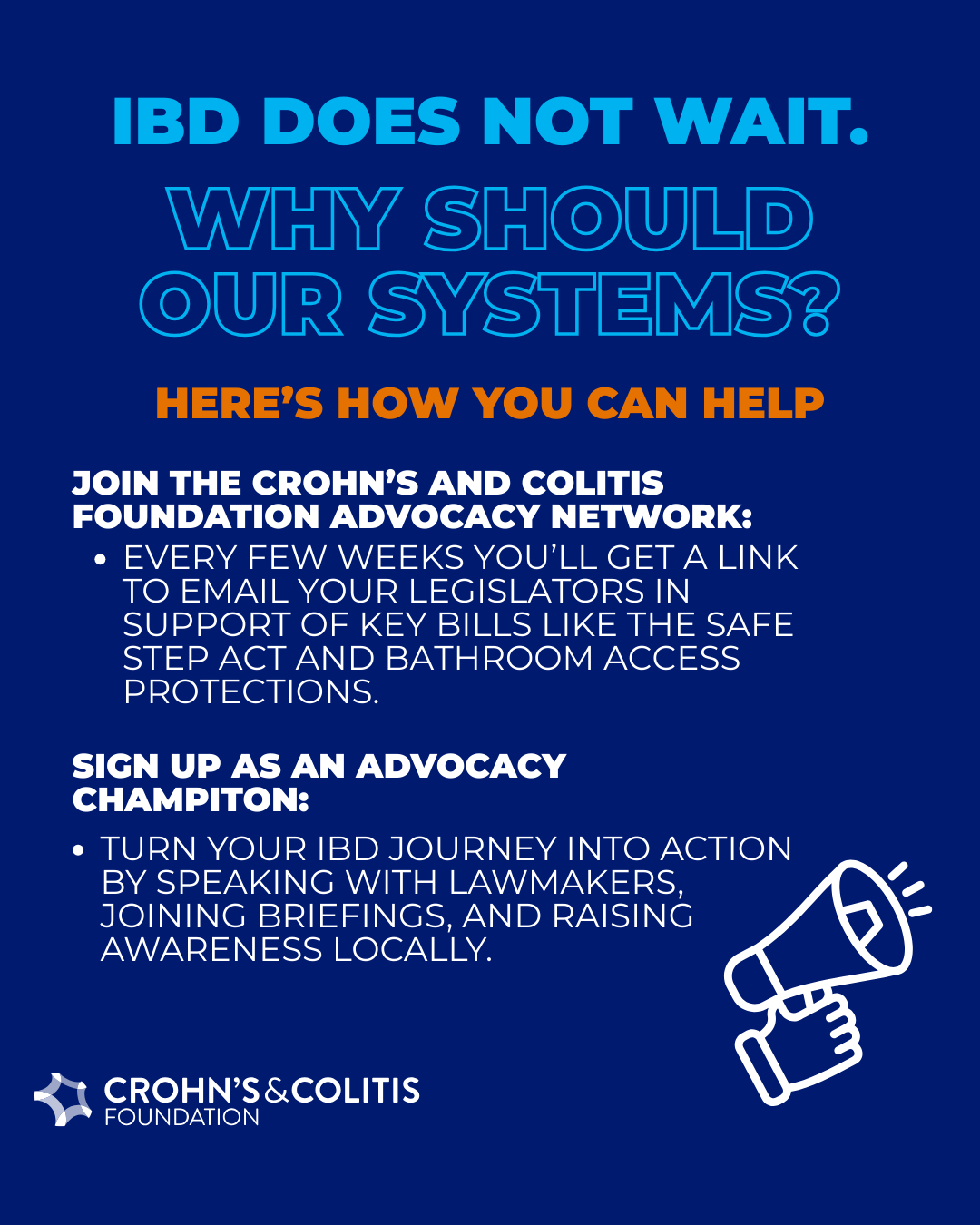
Congress can also pass the Safe Step Act, a federal bill that would require insurers to follow medical timelines instead of cost-driven ones. It would ensure patients have access to a clear, fast appeal process when treatment is denied. Though this change would not eliminate cost controls entirely, it would prevent months of needless pain, regression, and increased financial cost. The
bill has the support of patients, physicians, and national health organizations that have seen the damage caused by step therapy delays.
Neither of these solutions requires rebuilding the system from scratch. They are practical, proven, and ready to be implemented. What they need is public pressure. When lawmakers hear from their constituents, they are far more likely to act. By contacting your legislators now, you can help push these bills forward and ensure that people with IBD are met with urgency, not delay. IBD does not wait, and neither should our systems. Every delay, whether in treatment or policy, forces patients to fight harder than they should. No one should have to face that battle alone, and your voice can help change it.
One easy way to get involved is by signing up for the Crohn’s & Colitis Foundation’s advocacy network. A few times each season you’ll get a message with a ready-to-send link that goes straight to your legislators, asking them to support key bills like the Safe Step Act and bathroom access protections.
If you’re looking for something more hands-on, you can become an Advocacy Champion. Champions share their IBD stories with lawmakers, speak at Congressional briefings, and raise awareness in their own communities. It’s a way to take your lived experience and turn it into a force for change.
Change is possible, but only if lawmakers hear from us. By calling your representatives, joining the advocacy network, or stepping up as a champion, you can help turn these solutions into reality. For people living with IBD, these actions are more than symbolic; they are what make the difference between living with dignity and enduring needless suffering.