


Crohn's vs. Colitis: Early Signs, Differences, and Diagnosis
Published: November 30, 2024
 Living with inflammatory bowel disease (IBD), which includes Crohn's disease and ulcerative colitis, presents a range of challenges that often go unspoken due to stigma. Despite affecting approximately 1 in 100 Americans, IBD remains shrouded in silence. At the Crohn's & Colitis Foundation, we are committed to breaking this silence by fostering open conversations that lead to better understanding, treatments, and ultimately, cures. This effort is particularly highlighted during Crohn’s & Colitis Awareness Week, established by the U.S. Senate in 2011 to bring attention to these conditions.
Understanding Inflammatory Bowel Disease
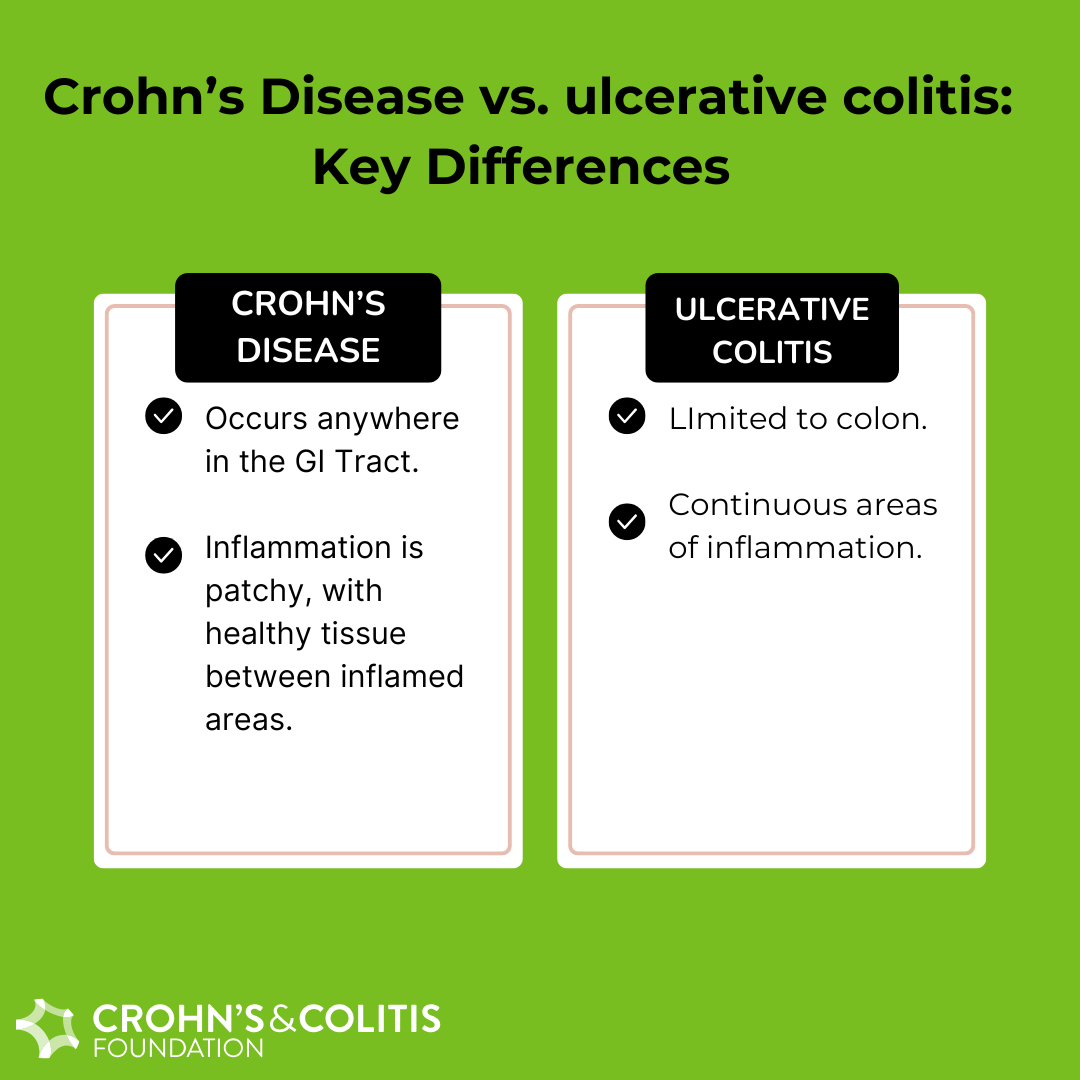
IBD is a term that encompasses chronic inflammatory conditions affecting the gastrointestinal (GI) tract. The two primary types are Crohn's disease and ulcerative colitis. While both involve inflammation, they differ in their specific characteristics:
Crohn's Disease: This condition can affect any part of the GI tract from the mouth to the anus. It often presents with patchy areas of inflammation interspersed with healthy tissue.
Ulcerative Colitis: Confined to the colon (large intestine), this form causes continuous areas of inflammation.
These differences are crucial for diagnosis and treatment planning. For more detailed insights into each condition, explore our What is Crohn’s Disease? and What is Ulcerative Colitis? resources.
Recognizing IBD Symptoms
The symptoms of IBD can often mimic other gastrointestinal issues, making diagnosis challenging. Common symptoms include abdominal pain, changes in bowel movements, fatigue, and weight loss. If you experience persistent symptoms lasting more than a few days, it's essential to consult a healthcare professional for accurate diagnosis through blood tests, stool tests, endoscopy, or colonoscopy.
Exploring Extraintestinal Manifestations
Beyond gut-related symptoms, IBD can lead to extraintestinal manifestations (EIMs), which affect other parts of the body including:
- Joint Pain: A common complaint among IBD patients.
- Anemia: Often due to chronic inflammation or blood loss.
- Skin Issues: Such as erythema nodosum.
- Eye Inflammation: Including uveitis.
- Liver Complications: Such as fatty liver disease, hepatitis, and gallstones.
- Kidney Problems: Like kidney stones.
These manifestations underscore the complex nature of IBD and the need for comprehensive care.
Treatment Options for Crohn's Disease and Ulcerative Colitis
While there are no cures for IBD, various treatments can help manage symptoms:
- Medications: Anti-inflammatory drugs, immune system suppressors, and biologics are commonly used. For a comprehensive list of medications, refer to our IBD Medication Guide.
- Surgery: Some patients may require surgical interventions. Learn more about surgical procedures for Crohn’s disease and ulcerative colitis.
Lifestyle Tips for Managing IBD
Managing IBD involves more than just medical treatment; lifestyle adjustments play a vital role. Here are some practical tips:
Dietary Guidance: During flare-ups, opt for low-fiber foods to reduce digestive stress. This can help minimize discomfort and manage symptoms effectively.
Stress Management: Practice relaxation techniques like meditation or yoga to help manage symptoms. Stress can exacerbate IBD symptoms, so finding effective ways to relax is crucial.
Adaptable Exercise: Engage in physical activities that suit your condition. Regular exercise can improve overall health and well-being but should be adapted to avoid triggering symptoms.
For more comprehensive advice on daily living with IBD, visit our Navigating Daily Life with IBD resource page.
The Purpose of Crohn’s & Colitis Awareness Week
This Awareness Week is an opportunity to bring attention to the challenges faced by those with IBD. Participate in our It Takes Guts Award contest by voting for inspiring stories until December 7. The winner will be featured across our platforms and receive exclusive Foundation swag.
By sharing stories and raising awareness during this week, we aim to change the conversation around IBD and support those affected by these conditions. Join us in supporting the Crohn's & Colitis Foundation by donating to fund research and resources. Together, we can make a difference in the lives of those living with IBD.
Thank you to our Awareness Week sponsors: Abbie, Boehringer Ingelheim, Boomerang, Celltrion USA, and Pfizer.