




Transforming the Future of IBD: A Doctor’s Perspective
Published: September 10, 2025
Where We Are Now: The Present IBD Landscape
As a gastroenterologist and scientist focused on inflammatory bowel disease (IBD), an umbrella term for disorders that cause inflammation of the gastrointestinal tract, including Crohn’s disease and ulcerative colitis, I have the opportunity to both participate in novel research and see firsthand how the findings improve the lives of my patients.

From my 24 years in gastroenterology, I can share that it’s an exciting time to be in this field of medicine, and people living with IBD have reason to be optimistic.
Crohn’s disease and ulcerative colitis are chronic conditions, and while we don’t yet have cures, over the past 20 years we’ve made remarkable progress in understanding and treating IBD.
Before effective medical therapies were available, Crohn’s patients often needed intestinal surgery every few years, with some undergoing 10 or more operations. With the revolution of advanced therapies in 1998, it is rare to see patients who have had more than three surgeries. We used to send one in four patients hospitalized with acute severe ulcerative colitis for colectomy surgery within 90 days, but thanks to modern therapies, that rate is now just 6%.
More treatment options are available than ever before. There are currently 23 approved therapies and 10 different mechanisms of action for these therapies. A “mechanism of action” refers to the specific way a medication works within the body to address the cause and symptoms of IBD.
It may seem like a wealth of options for managing the disease, but the truth is, gaps remain. We have further to go to truly transform the lives of people with IBD.
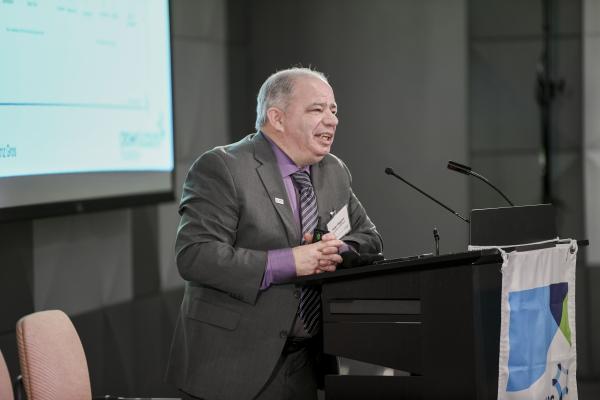
Dr. Peter Higgins addresses a crowd at the Foundation's 2025 IBD Innovate conference
Three Areas with the Power to Transform IBD
A few of the pressing gaps researchers and providers are eager to address include:
- Preventing the progression of IBD by catching the disease and flares early and intervening quickly.
- Ensuring treatment targets both the disease and patient symptoms, such as pain.
- Increasing participation in clinical trials to discover new IBD treatments and make existing therapies even more effective.
Early Intervention: Preventing IBD Progression
A critical challenge in our field is catching IBD while the disease is in its early stages. By intervening early and starting patients on an advanced therapy (biologics or JAK inhibitors) at the time of diagnosis, we have a better chance of preventing lasting damage to the bowel. Early intervention can limit the need for steroids or surgery.
Beyond the initial diagnosis, another avenue for early intervention is close monitoring of the disease to prevent a clinical flare before it occurs. Researchers and product developers are working to create options for at-home diagnostic testing that could alert patients if there are changes in the biomarkers of their disease that indicate increased inflammation, which can predict a flare and provide a window to intervene before a flare starts. For instance, the Crohn’s & Colitis Foundation has supported the development of a wearable sensor currently in clinical trials that monitors biomarkers of inflammation in a person’s sweat so that they can get real-time information about their inflammatory status.
Combination and Novel Therapies: Addressing Pain
While we’ve also made significant progress in bringing IBD medications to market, another challenge is developing better combination therapies, using two or more medications simultaneously. This could help address symptom gaps that patients currently face—like pain. Patients can sometimes face hurdles in receiving insurance coverage for the use of two medications.
Many IBD treatments control inflammation but don’t address secondary symptoms that matter to patients and disrupt their everyday lives. For example, nearly half of patients still experience pain even when their inflammation is under control.
Common pain relievers, known as nonsteroidal anti-inflammatory drugs (NSAIDs), like ibuprofen or aspirin, aren’t recommended for people with IBD because they can trigger flares, leaving opioids as the primary option despite their high risk of addiction and complications.
The good news is that new, non-opioid therapies (like suzetrigine), which manage pain by blocking sodium channels in nerves, are now FDA approved for postoperative pain, and clinical trials will be key to demonstrating their benefit for IBD. The Foundation is also addressing patient difficulty in getting insurance to cover combination therapies by advocating for change in access to care.
Listening to Patients: Improving IBD Clinical Trials
Just as each individual I treat in my office is unique, so is their disease and the treatment strategies I prescribe. Listening to the needs of each patient isn’t just crucial for creating a tailored therapeutic approach, it’s essential for our understanding of IBD.
Clinical trials are how we study the effectiveness of novel therapies, better understand disease mechanisms, and improve the quality of life of people with IBD. They are also one of the best avenues to identify what matters most to patients—so our treatments meet their needs.
Unfortunately, most trials fall short of enrollment targets, especially in underrepresented communities, causing delays in both research progress and patient care. Part of the problem is that the FDA has long required patients to stop their current medications for up to 12 weeks (a washout period) before starting a new medication in a trial. Patients who are interested in trials are already not doing well on their current therapy and long washout periods without effective therapy make clinical trials unattractive. The Foundation is working with the FDA to shorten washout periods for IBD clinical trials.
The Foundation has also launched an initiative to improve the recruitment and retention of patients in IBD clinical trials. It explores and addresses barriers to enrollment among all communities and expands education about clinical trials for both patients and professionals.
How the Foundation Drives IBD Research Forward
While gaps remain, I am privileged to work alongside the people dedicated to bridging them. I am encouraged by their resolve, collaboration, and efforts.
As the Chair of the Foundation’s National Scientific Advisory Committee, I oversee our research agenda and priorities. In 2024, we had 299 active research projects and invested more than $30 million in research. This research is what enables the development of novel therapies and strategies that will support early intervention.
The Foundation has played a role in every major IBD research breakthrough. We see a better future for people with IBD on the horizon and I’m excited to go there.
About Dr. Peter Higgins
Dr. Peter Higgins received his bachelor’s and medical degrees from Duke University, as well as a Ph.D. in molecular cancer biology. He completed a fellowship in gastroenterology at the University of Michigan in 2004, earned an M.Sc. in clinical research design and statistical analysis at the University of Michigan School of Public Health, and joined the University of Michigan faculty the same year.
Dr. Higgins is chair of the Crohn’s & Colitis Foundation National Scientific Advisory Committee and previously served as the IBD editor for the American Journal of Gastroenterology. His research focuses on inflammatory bowel disease, with a particular interest in the molecular mechanisms of intestinal fibrosis, which can lead to intestinal blockages and surgery. Dr. Higgins studies the use of barrier-enhancing therapies to heal the lining of the intestine. His clinical research includes studies on patient-reported outcomes in IBD, combination therapies in IBD, and acute severe ulcerative colitis. Dr. Higgins’ research interests are complemented by his clinical interest in improving the quality of care of patients with IBD.
He is a member of the AGA IBD Quality Measures Committee and has participated in the development of national guidelines for high-quality IBD care. Dr. Higgins has received many honors and awards, including the AGA IBD Clinical Research Excellence Award.