



World IBD Day: IBD Is More Than the Gut — Here’s Why
Published: April 15, 2026
This World IBD Day, learn how Crohn’s disease and ulcerative colitis affect mental health and the gut-brain connection — and ways to cope.
World IBD Day: The Hidden Mental Health Impact of IBD
Why mental health awareness matters in Crohn’s disease and ulcerative colitis
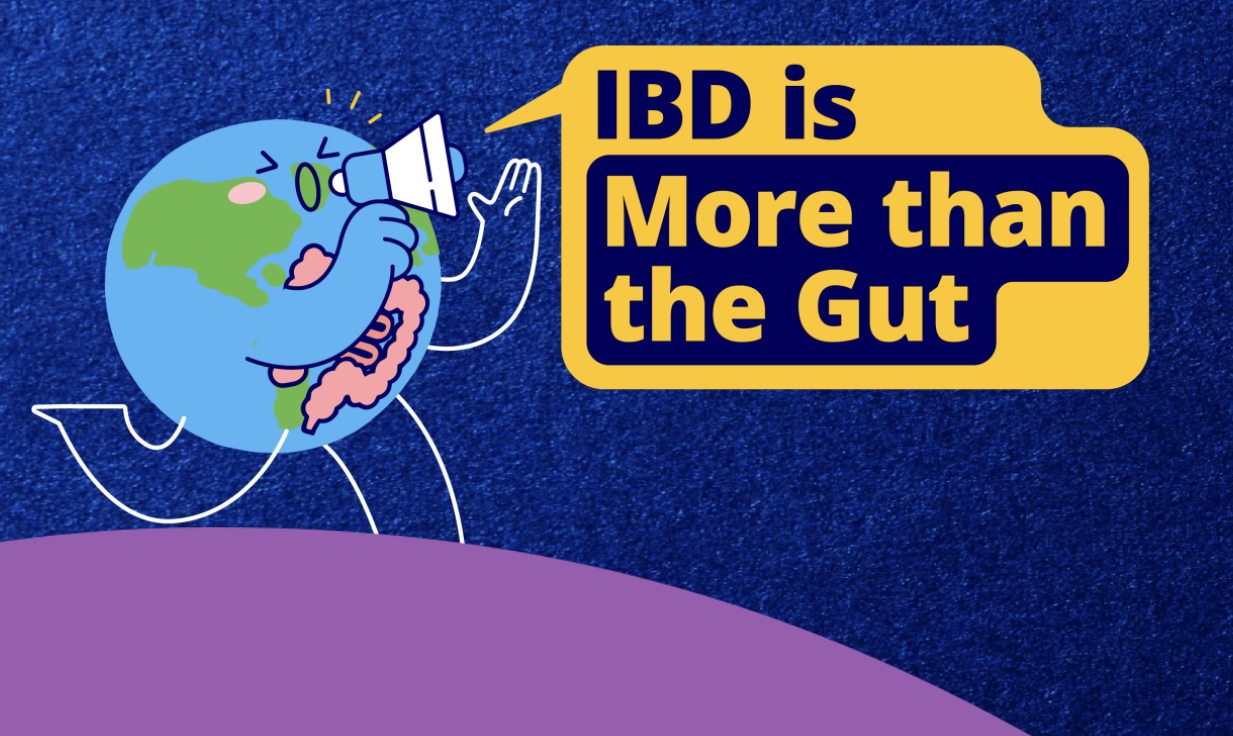
On World IBD Day, observed during Mental Health Awareness Month, it’s important to recognize something that often goes unseen: IBD is more than the gut—it affects mental health, too.
Nearly 1 in 100 Americans live with Crohn’s disease and ulcerative colitis. And the impact goes far beyond physical symptoms. People with IBD are 3–5 times more likely to experience anxiety and 2–4 times more likely to experience depression.
These numbers tell a clear story: the emotional toll of life with IBD is real. It’s not a personal weakness—it’s the natural response to managing a chronic, unpredictable condition.
Patient perspective: Living with IBD beyond physical symptoms

“I reached a point where I realized there’s no reward for suffering through mental illness in silence," said IBD patient advocate and Foundation social media ambassador Gaylyn Henderson. “It’s okay not to be okay, but it’s not okay to feel like you have to do it alone. When we share our stories, we remind each other that we’re not alone and create space for real healing.”
Living with IBD often means navigating uncertainty, fatigue, and disruptions that affect work, relationships, and daily routines. Feelings like stress, isolation, grief, or frustration are valid.
You are not alone in how you feel—and it’s okay to talk about the emotional side of IBD.
Understanding the Gut–Brain Connection in IBD
What is the gut-brain axis?
The gut-brain axis—also known as the gut-brain connection—is the communication network between your digestive system and your brain.
In Crohn’s disease and ulcerative colitis:
- The gut and brain are constantly signaling each other
- Stress and emotions can influence digestive symptoms
- Active disease can impact mood and mental health
This two-way relationship is why caring for your mind is part of managing IBD.
How stress and IBD symptoms are linked
Stress doesn’t cause IBD, but it can worsen symptoms. Stress and IBD are closely connected through the nervous system, which can heighten pain, urgency, and fatigue.
Daily realities that affect mental health include:
- Unpredictable flares and abdominal pain
- Fatigue and disrupted sleep
- Social limitations at work, school, or travel
- Stigma or embarrassment around symptoms
Over time, these challenges can contribute to depression, anxiety, and emotional burnout. These responses are human reactions to complex conditions.
The good news: While IBD can be unpredictable, there are ways to support both mental and physical health.
Practical Ways to Support Mental Health with IBD
Managing Depression/Mental Health, Stress, and Coping with IBD doesn’t follow a single path. These flexible strategies can help you build support and resilience.
Share your story and reduce isolation
You are in control of your story—what you share, when, and with whom.
Opening up can:
- Reduce isolation
- Build understanding and support
Examples:
- Speak with an employer or teacher to request accommodations
- Sharing symptoms with friends to ask for flexibility when planning
Pacing energy and managing stress with IBD
Avoid the “all or nothing” cycle that can worsen stress.
“I’ve learned I can’t do everything — but I can do the things that matter most if I plan for them,” noted personal trainer and Foundation social media ambassador, Joel Nixon. “Sometimes that means building in rest or mapping out restrooms before I head somewhere. It’s not about missing out — it’s about protecting my energy so I can show up fully.”
Try:
- Prioritizing what matters most each week
- Scheduling rest and recovery time
- Planning for meals, medication, and restroom access
Small adjustments can make daily life with IBD feel more manageable.
Reframing negative thought patterns
Thoughts like “Everything is ruined” can intensify anxiety and symptoms.
“Cognitive reframing helps people move from fear-based thinking to more balanced perspectives,” said licensed clinical psychologist Tiffany Duffing, PhD. “When someone shifts from ‘Everything will go wrong’ to ‘I can adjust if I need to,’ they often feel more in control and less overwhelmed.”
A simple 3-step approach to reframe:
- Notice the thought
- Separate facts from fear
- Replace it with a more balanced perspective
Example:
“This trip is ruined” → “I can still enjoy meaningful parts of this experience.”
Address physical and mental symptoms together
Pain, fatigue, and sleep issues are closely tied to mood.
Support both by:
- Combining rest with gentle movement
- Trying small changes like short walks or calming routines
- Talking with your care team about ongoing symptoms
Use gut–brain therapies and relaxation tools
Evidence-based techniques can help regulate the gut brain axis and calm the nervous system:
- Gut-directed hypnotherapy
- Deep breathing (diaphragmatic breathing)
- Progressive muscle relaxation
- Guided imagery or body scans
These tools are increasingly part of comprehensive IBD care.
IBD Mental Health Resources and Support
Foundation tools and community programs
Support is available—you don’t have to navigate IBD alone.
- Mental health and coping resources
- IBD Help Center for personalized support
- Peer communities and local programs
- Find a GI or mental health provider
Talk to a mental health and GI provider
- Talk with your GI provider about mental health
- Consider therapists experienced in chronic illness or GI psychology
Crisis resources and immediate support options
If you are in immediate distress, call or text 988 to reach the 988 Suicide & Crisis Lifeline in the U.S. for 24/7 confidential support.
Featured Resource: More Than the Gut Guide
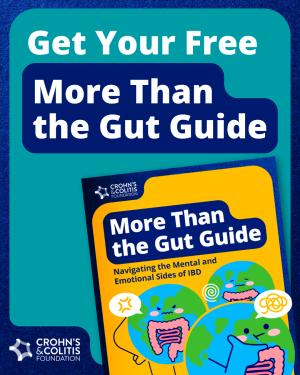
Created for World IBD Day, the More Than the Gut Guide is an 8-page resource focused on the mental and emotional side of Crohn’s disease and ulcerative colitis.
“When we help the nervous system shift out of constant high alert, many people experience less pain and fear around their symptoms,” said GI Psychologist, Megan Riehl. “Mental health tools can be an important part of caring for the gut.”
What the guide includes for mental health support
- Expert insights
- Practical coping tools
- Real patient stories
- Guidance on stress, relationships, fatigue, and emotional health
Download the More Than the Gut Guide to access tools and explore additional resources that you can start using today.
You Are More Than Your Diagnosis
Living with IBD can be challenging—but your mental health matters just as much as your physical health.
IBD is more than the gut. Healing means supporting the mind and body. Both deserve attention and support. Caring for your mind is part of managing IBD.
This World IBD Day, let’s go there—talk openly, break stigma, and reach for the support you deserve.
Thank you to our World IBD Day Sponsors: AbbVie, Eli Lilly, Sanofi, and Takeda Pharmaceuticals.