




Issue highlights:
Breaking the silence around IBD
Research linking gut bacteria and IBD may lead to improved care
Remission definitions get a closer look
Improving mental health is top priority for IBD healthcare providers
Camp Oasis turns 20

FeaturedStory
Breaking the Silence Around IBD


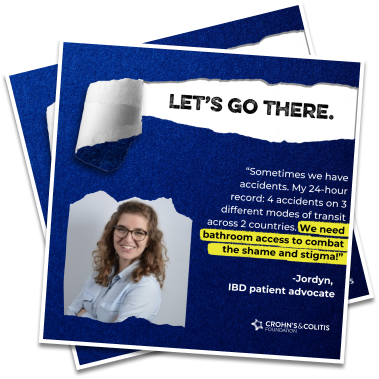
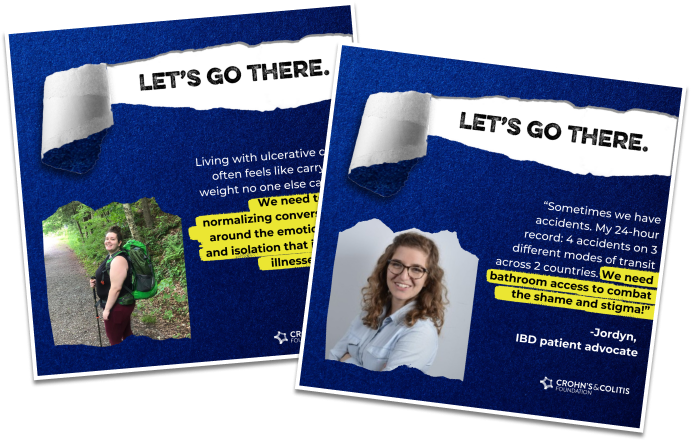
Sharing the realities of IBD? Let’s go there.
IBD is uncomfortable to talk about, but not as uncomfortable as it is to suffer from every day.
While nearly one in 100 people in the United States are affected by IBD, the disease remains largely invisible due to societal taboos about discussing bathroom issues and the stigma often associated with it. Yet, we know that IBD is much more than a “bathroom disease” that includes, among other things, chronic pain, challenges with eating, and a significant mental toll.
Living with IBD can be a daily struggle. We believe talking about it shouldn’t be.
The Crohn’s & Colitis Foundation has launched a new campaign called Let’s Go There to break the silence around IBD and bring conversations into the open about what it’s like to live with the realities of the disease.
Since its launch, people with IBD from across the country – like Andrew, Shonda, and N’Dea -– have been “going there” and sharing their powerful stories through social media to reveal the anxiety, isolation, and daily hurdles of living with the disease that are not openly discussed, bringing awareness to the disease. They’re also revealing how they stay hopeful and resilient in the tough moments and shedding light on ways the Foundation has helped.
Building Community, Connecting You to Resources, Driving Hope
The mission of Let’s Go There is to make IBD visible and combat the silence surrounding it for too long. By sharing stories, we’re building a supportive community of understanding and connecting people with IBD to Foundation resources to help them live their best life – from what to eat and dating with IBD to talking about your ostomy and dealing with urgency. “Let’s Go There demonstrates that there is nowhere we won’t go as a Foundation to drive positive impact and provide hope,” says Christy DeSantis, chief marketing officer.


Making An Impact
Since its launch in July 2024, the campaign has reached hundreds of thousands of people and has generated record engagement on social media, making it clear that people with IBD are ready and willing to have these important conversations.
Gary, featured in our video here, shares his 40 years of experience living with Crohn's: "When Crohn's is flaring, it can get pretty dark. You don't want to get out of bed or eat; you're running to the bathroom 40 or 50 times a day." He added that the Foundation has been invaluable in providing information on new treatments and access to great doctors.
Sara Levitt, a model and IBD advocate from Canada, praises the campaign for challenging barriers and stigmas. Says Sara, "Let's talk and open things up."
Embodying Let’s Go There

Canadian model puts her ostomy in pictures
Diagnosed with ulcerative colitis at 3, 30-year-old Sara Levitt had spent most of her life struggling to accept her ostomy; but in September, she marked one year as a vocal IBD advocate using social media to create a space where beauty and visible illness coexist without stigma.
Styling her once-hidden ostomy in everything from bikinis to couture, her posts dismantle misconceptions about IBD, ostomies, and the visible and invisible illnesses people navigate. "It's about challenging the taboo and normalizing what so many live with every day," she says of her work. Sara’s candor in her feed encourages her audience to accept themselves and live as unapologetically as she does now.
researchUPDATE
People With IBD Face Financial Strain as Care Barriers Persist


Sobering results of a new national Foundation study highlight widespread barriers to accessing healthcare for many people living with IBD, revealing the sacrifices they make to get adequate treatment, and their emotional and financial hardships when unmet medical needs lead to worsening health.
Of more than 2,200 IBD patients and caregivers surveyed, over 40 percent reported making a significant trade-off to afford their medical care, the top being forgoing vacations and major purchases (30 percent); incurring rising credit card debt (22 percent); and cutting back on food, clothing or other basic household items (21 percent). With over 63 percent reporting problems getting necessary medications, many couldn't follow prescribed treatment plans, resulting in negative health outcomes for 66 percent.
"How can this be okay?" asks Cassie Ray, the Foundation's director of advocacy.
"Of the patients who responded, 98 percent have insurance, but more than half reported delays in obtaining their medications, and 69 percent of those who experienced delays report adverse health effects. "It's time for legislators to change laws so that patients can get the medications they need when they need them," says Ray.
These somber stats provide irrefutable evidence of IBD patients being harmed when their medications are delayed or denied. "We've always known this is true, but our evidence has been largely anecdotal," adds Ray. "This survey has quantified the scope of the problem, which we can now share with legislators."
Published in the IBD Journal the Foundation will use the study's findings to reform pharmacy benefit manager practices and step therapy mandates and improve transparent drug pricing and access to biosimilar drugs.
voices of Ibd

“They said the new medication should work the same, but it didn’t: I went into a flare and couldn’t attend school.”
When Dr. Ariel Jordan entered medical school in 2017, she didn’t expect to become an IBD advocate or to fight her insurance for the right medication. After being forced onto an ineffective alternative, she’s still pushing for consistent care (“It feels like it will never end”). Now, as co-chair of the Foundation’s Government & Industry Affairs Committee, Dr. Jordan is committed to improving access for all…because she knows what the alternative feels like.
Research News & Announcements
New IBD Bacterial Findings Point to Personalized, Innovative Care
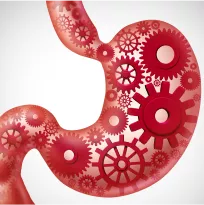
Foundation-funded research at Massachusetts General Hospital has identified specific gut bacterial strains linked to inflammatory bowel disease (IBD), which could lead to improved and more personalized diagnostics and treatments. Published in Cell Host & Microbe, the study found hundreds of bacterial strains more prevalent in IBD patients…strains that thrive during flares and have genetic traits that help them survive during inflammation. These findings could open up new avenues for developing tailored treatments for people living with Crohn’s disease and ulcerative colitis.
New Collaboration Harnesses AI to Revolutionize UC Diagnosis and Treatment

The Foundation has teamed with PathAI—a leader in AI technology for tissue sample analysis—to advance ulcerative colitis research. By analyzing gut samples in our IBD Plexus® database of patient information, using its AI-powered tools, PathAI hopes to uncover new disease markers through more accurate disease scoring and gain more insights into the gut tissue microenvironment. This could lead to improved diagnoses, a better understanding of treatment effectiveness in clinical trials, and improved disease management for patients.
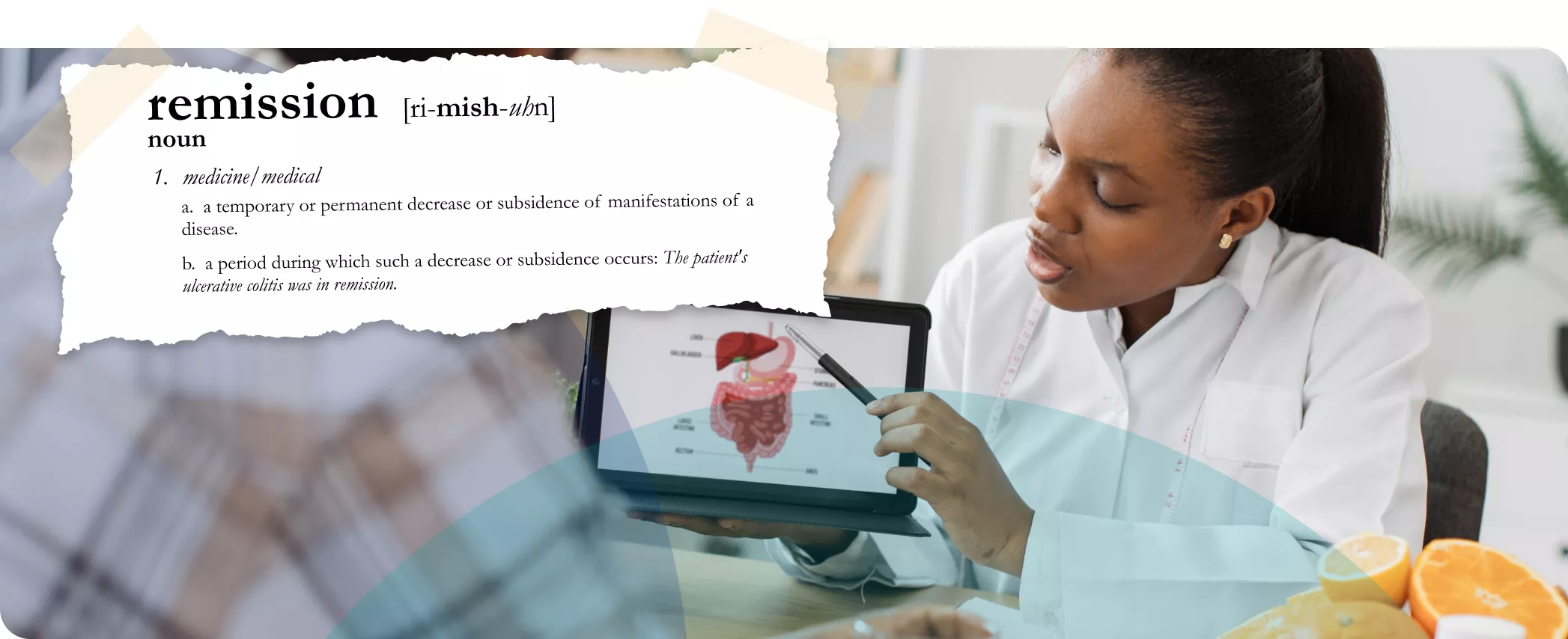
What Is Remission? Survey Reveals Differences Between Clinician and Patient Perspectives
Results point to need for enhanced collaboration and focus on quality of life
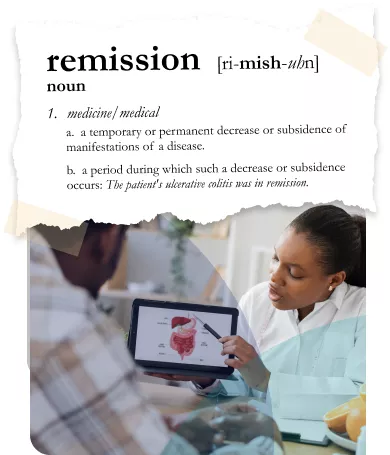
Achieving remission can be a critical milestone in an IBD patient's journey. A new Foundation study shows the need for healthcare professionals and patients to have more direct conversations on what this means and align on all aspects of IBD management, from defining treatment goals to assessing their health status.
What We Investigated
From October to December 2023, nearly 1500 U.S. adults with IBD were emailed a survey asking questions regarding remission, including their definition of remission, its attainability, and whether they’ve discussed it with their doctor.
What We Learned
While 67 percent believe remission is possible, patients and healthcare professionals differ in how they define it. Patients often associate remission with symptom relief ("clinical remission"), whereas doctors rely on objective tests, including colonoscopy results ("endoscopic remission") and inflammation levels ("histologic remission"). Regardless, patients still feel comfortable discussing remission with their healthcare providers.
What This Means
The differing perspectives between a patient’s and a clinician’s definitions can have substantial implications for patients. Patients who only focus on symptom control may underestimate the importance of achieving deeper levels of remission, which is very important in the management of their disease. Ongoing inflammation, even without symptoms, can lead to disease progression and complications over time.
Next Steps
The Foundation is collaborating with the IBD community and healthcare providers to offer helpful education and common language on this critical topic.
The Foundation is also working to ensure that patient-reported outcomes—which include reduced urgency or fewer nighttime trips to the bathroom—are included as outcomes in research and clinical trials. Through our advocacy efforts, we're encouraging the U.S. Food and Drug Administration to prioritize these real-life patient experiences in future trial measures.
voices of Ibd

“There were times I thought, ‘I feel great: I must be in remission.’ Then I’d learn from my doctor my inflammation was sky high.”
Katy Bagnato was diagnosed with ulcerative colitis in 2010 but didn’t experience clinical remission until October 2024. “My GI would say, ‘It’s great you’re feeling well, but we need to adjust treatment: Active disease has long-term risks.’” Katy’s takeaway? Follow medical advice “even when you feel okay.”
Healing Beyond the Gut: Addressing Mental Health in People with IBD


Inflammatory bowel diseases affect the body, but like most chronic illnesses, they also heavily impact the mind. People living with IBD can be 3 to 5 times more prone to developing anxiety and 2 to 4 times more likely to develop depression than their IBD-free counterparts.
Stephen Lupe, a gastrointestinal psychologist at the Cleveland Clinic, knows this well. “The more data we get, the more we know that disturbances in the gut microbiome contribute to mood type problems. As patients experience more psychological stress, their symptoms get worse, and their hospital admissions and need for surgery increases.”
Recognizing the link between psychiatric stress and disease flares, the Foundation is raising doctors’ awareness about this dangerous cycle so they can better support their patients with strategies to balance both their IBD and their mental health.
After collecting evidence-based background information and recommendations from previously published articles, the Foundation worked with a panel of IBD and mental health experts to create a consensus statement outlining six actions doctors can take to enhance patient screening and treatment. These statements have become a core set of guidelines that support the whole patient, emphasizing routine mental health screening, integrating psychological support into IBD care, and improving access to mental health resources. (The full report was published in IBD Journal.)
“We have to start normalizing feelings like stress, worry, and depression for people who have been diagnosed with IBD,” says Lupe, who contributed to the report. “We have to address how people live with IBD to make sure we are taking care of them as effectively as we can.”
The Foundation will utilize the consensus statement to educate people with IBD and medical practitioners about this important issue and to advocate for improved access to clinicians who support IBD patients' mental health.
patientSupport
Your IBD, Your Life: A New Resource for Women
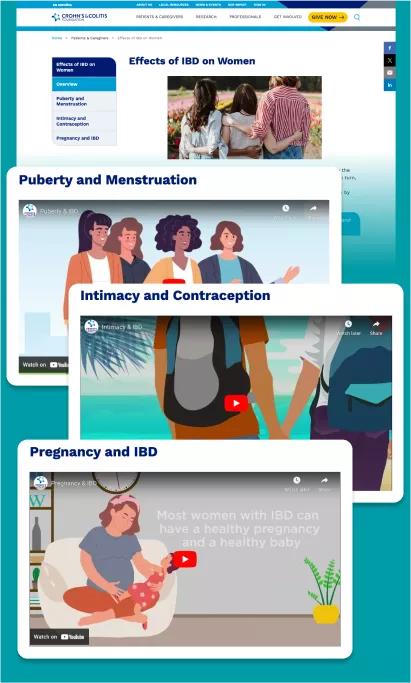
The Foundation is proud to be the trusted source of education and support for people with IBD. We recently introduced new information and resources for women with IBD.
From puberty to pregnancy and beyond, our new Effects of IBD on Women web page provides vital insights on the impact of IBD on women in various stages of their lives...and, the impact of a woman's stage of life on her IBD.
By addressing concerns like disease monitoring, nutritional needs, and heredity risks, our articles, videos, and expert advice equip women with the knowledge they need to navigate their health confidently as both their bodies and diagnoses evolve.
Camp Oasis Turns 20

Campers report a boost in hope and their ability to manage their disease
When Knox’s parents picked him up from his first Camp Oasis in August, they weren’t ready for his 2.5 hours of nonstop excitement. “He couldn’t stop sharing one incredible camp story after another,” remembers his mother, Ashley. “His Crohn’s diagnosis is still new, and it’s been overwhelming and scary. We’re beyond grateful for the friendships and experiences he gained at camp.”
Multiply Knox’s joy by 20 years and you’ll sense the magic Camp Oasis delivers kids with Crohn’s and ulcerative colitis. Even before the program was consolidated under a national umbrella in 2005, it’s been powered by an army of volunteer healthcare professionals, counselors, and trained staff, with a mission to connect kids who get it…letting them focus on living, not their diagnosis.
Thank you to our generous donors who make this life-changing program possible.
Interested in our 2025 session?
Fill out this interest form to stay in the know. Registration starts Feb. 3, 2025.
Fun at Camp Oasis
Almost 1,000 kids and teens attended Camp Oasis’ 2024 session. Our survey of families following their experience revealed that campers felt less alone and more hopeful about their future living with IBD. Teens also reported feeling more confident about managing their disease. See for yourself.









Celebrating Our Impact and Our Visionary Supporters
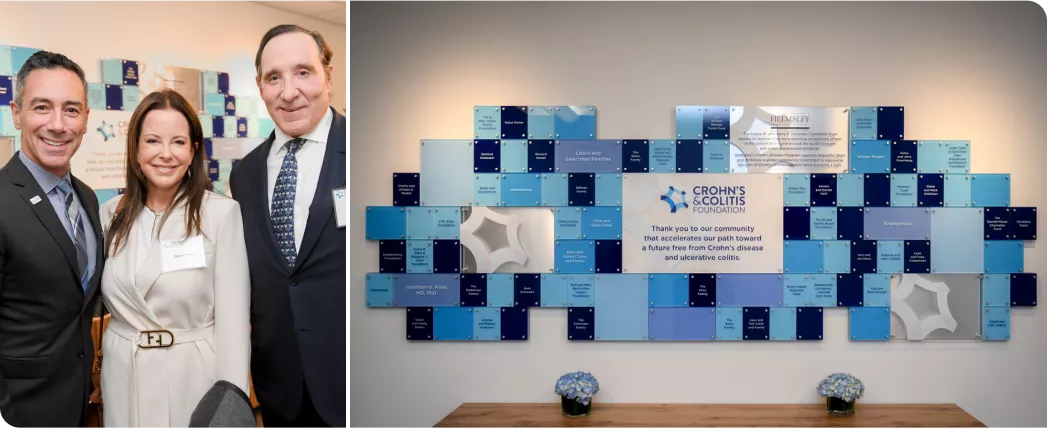
The Crohn's & Colitis Foundation has played a role in every major breakthrough in IBD. We owe our progress to the incredible support of our donors, whose contributions have made us the trusted source for millions of Americans living with Crohn's disease and ulcerative colitis.
Recently, our National Board of Trustees joined us to express our heartfelt gratitude to our generous supporters, whose transformative giving and impact on the IBD community is honored through a new wall at our New York Headquarters. The Wall of Visionaries celebrates donors whose support has enabled the Foundation to break new grounds in IBD research and bring hope and healing to those affected by IBD. Michael Osso, President & CEO of the Foundation, shared that “the wall represents our donors’ compassion for people living with IBD and their extraordinary commitment to the vision for the Foundation’s programs – and what it can mean for those struggling with these diseases.” We are deeply grateful to our donors whose contributions accelerate our path toward a future free of IBD.
Do You Know Our Impact?

With gratitude to all of our supporters!
The following individuals and foundations have made important and significant contributions to the Crohn’s & Colitis Foundation in support of our mission programs. We are deeply grateful to them for their extraordinarily generous gifts.

Financials
The money the Foundation spends goes toward research, education, and support services.

Impact Report Archive
Follow the Foundation’s advancements in the IBD space.