



Issue highlights
New study on racial disparities in IBD care reveals gaps
Early anti-TNF therapy prevents Crohn’s complications in kids
IBD Ventures-funded research targets fibrosis, remission, and gut healing
National Volunteer Week celebrates the people driving our progress

FeaturedStory
Advancing Equity in IBD Care: No Patient Left Behind

The Foundation turns insight into impact, through research that’s reshaping the future of IBD care.
Racial, ethnic, gender identity, and socioeconomic disparities remain significant barriers to equitable IBD care in the U.S. At the Crohn’s & Colitis Foundation, we are shining a light on where the needs of people with IBD aren’t being met and we’re pushing for real improvements in healthcare, education, and public policies to improve their quality of life.
Recent Foundation-supported research has made clear the disparities in care for members of the IBD community.
Uncovering Racial Disparities in IBD Care
A first-of-its-kind national study, investigators from the Crohn’s & Colitis Foundation, University of Pennsylvania, and the University of North Carolina at Chapel Hill, uncovered stark differences in IBD treatment across racial and ethnic groups. The study found that 41% of Black adults over 65 rely on emergency room care, while only 26% of Hispanic and 31% of Asian adults receive standard treatments.
The Foundation has expanded partnerships and education initiatives to address medical and social barriers to quality IBD care. In collaboration with the University of Alabama at Birmingham (UAB), we are working on a five-year project to identify and address barriers to diagnosis and care among IBD patients, with an emphasis on those from the Black/African American community.
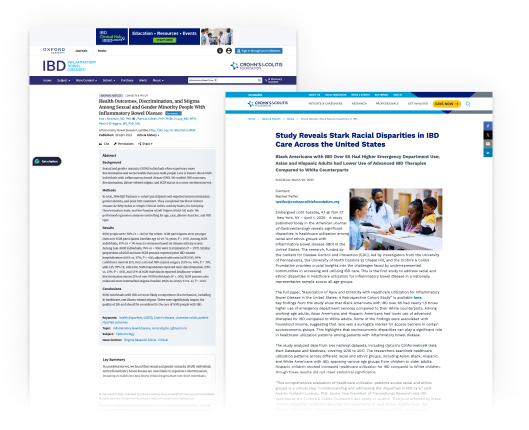
We are also embarking on a three-year initiative aimed at improving recruiting and retaining patients in IBD clinical trials—primarily focusing on Black/African American and Hispanic/Latino patients—so that patients from these communities are more adequately represented in research studies, and that future treatments and innovations meet their needs.
Gaps Across Gender and Sexuality
Recent research from patients enrolled in a Foundation study highlights care gaps among sexual and gender minority (SGM) individuals. While IBD prevalence among SGM individuals is like the general population, SGM individuals—especially transgender people—face higher rates of chronic illness, mental health challenges, and barriers to affirming care. Additionally, high-quality data on the impact of stigma and gender-affirming treatment is still limited.
Through educating healthcare providers, identifying care gaps and education needs, and advocating for inclusive care practices, the Foundation is working to reduce barriers and improve the health of sexual and gender minority individuals.
Bridging the Rural Treatment Gap
Another Foundation-supported national survey revealed that people with IBD living in rural settings are more likely to go untreated for IBD and less likely to access advanced therapies than urban patients. Limited provider access, transportation hurdles, and a lack of specialist clinics drive these disparities.
The Foundation is providing resources, referrals, and advocacy to help those with IBD in rural communities navigate healthcare systems, access specialists, and overcome geographic barriers.
Additional research currently taking place includes;
- Risk factors for IBD among U.S. Black women
- Healthcare disparities in Hispanic pediatric IBD patients
- Targeted cancer immunotherapies for Black/African American and Hispanic patients
Looking Ahead
Achieving equity in IBD care requires more than awareness. Through research, education, and advocacy, we are pushing to change how care is delivered and to whom.

ResearchUpdate
IBD Plexus® Data Reveals Power of Early Intervention in Pediatric IBD

IBD Plexus®, our research accelerator, houses the world’s most comprehensive collection of IBD patient data and biosamples, and connects researchers with the data, expertise, and technology needed to accelerate innovation and discovery. A recent study using pediatric data from IBD Plexus®, published in Gut, found that early use of anti-TNF therapy can prevent fistulas in children with IBD. About one in three children with Crohn’s disease develop perianal fistulas, painful complications that affect quality of life. Early anti-TNF therapy reduced fistula risk by over 80%, with a 94% reduction in children showing early signs of perianal disease.
Epstein-Barr Virus Linked to Liver Risk in Some With IBD
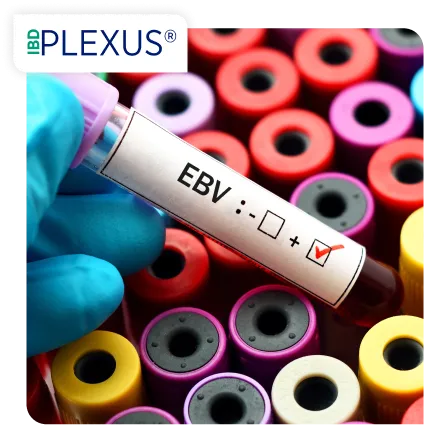
Using samples from IBD Plexus®, researchers analyzed the role of Epstein–Barr Virus (EBV) reactivation in people who develop primary sclerosing cholangitis (PSC), a chronic disease where the immune system attacks the bile ducts and liver. PSC is rare but more common in people with IBD. Published in Nature, the study found that EBV reactivation or recurrent infection was linked to a higher risk of PSC in some patients. EBV infection itself doesn’t cause PSC—more than 90% of adults with IBD have had EBV—but an individual’s immune response to the virus may help trigger PSC.
IBD VENTURES
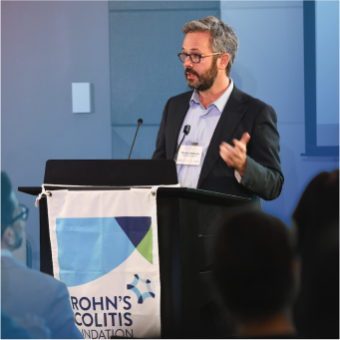
Promising Oral Therapy Could Help Fibro-Stenosing Crohn’s
A new oral drug for fibro-stenosing Crohn’s disease—a complication marked by intestinal scarring and obstruction—is now in Phase 2 trials. Supported by IBD Ventures, the Foundation’s venture philanthropy program, Medibiofarma is testing MBF-118, an oral drug that partially activates the protein PPARγ to help reduce inflammation and fibrosis without surgery. “There are treatments for inflammation, pain, and flare-ups—but nothing for long-term obstruction,” said Richard Roberts, Ph.D., chief scientific officer, at the Foundation’s IBD Innovate conference. “We hope MBF-118 will slow or reduce fibrosis.” A Phase 2b trial is underway in Europe.
IBD VENTURES
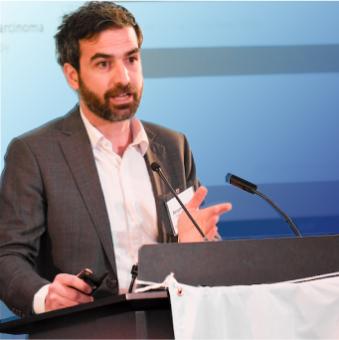
Live Biotherapeutic Targets Long-Term Crohn’s Remission
Exeliom Biosciences, funded by the Foundation and IBD Ventures, is testing EXL01, an oral live biotherapeutic designed to maintain remission in Crohn’s patients. Presented at this year’s IBD Innovate conference by CEO Benjamin Hadida, Phase 1 trial results showed EXL01 is well tolerated when combined with corticosteroids. Laboratory studies suggest it reduces inflammation by boosting anti-inflammatory signals, potentially reducing the need for long-term immune-suppressing drugs. With promising safety data and a Phase 2 trial underway to assess its role in preventing disease recurrence after surgery, EXL01 aims to help maintain remission without altering the microbiome.
Standing Strong for IBD Research
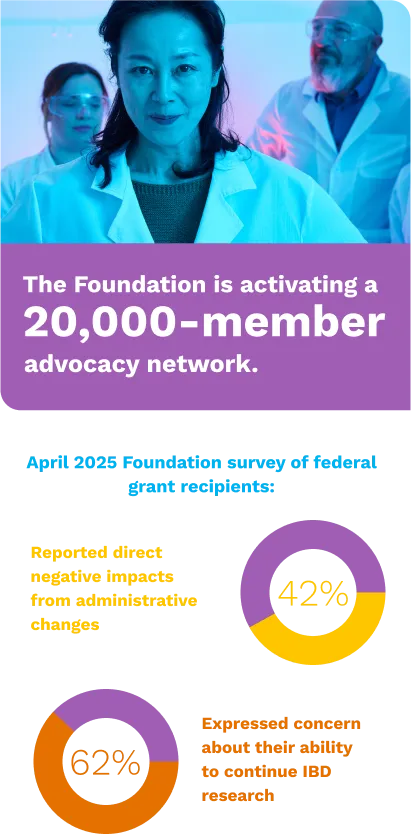
Foundation expands support in response to federal funding challenges
Recent and proposed federal funding cuts are creating serious challenges to researchers nationwide, delaying projects, eliminating positions, stalling career development, and threatening to reverse years of hard-earned progress in treatment discovery. Recognizing the urgency of this moment, the Foundation is mobilizing expanded support for the IBD research community.
Here’s how we’re taking action—and standing with researchers in the months ahead.
Listening to Researchers, Responding with Action
In April 2025, the Foundation surveyed past and current grantees who received federal funding for IBD research in the past five years (see accompanying graphics). Many also noted an urgent need to seek funding outside the government.
In response, the Foundation is increasing flagship research awards, underwriting no-cost access to IBD Plexus® for academic investigators (researchers apply here), and shortening the application-to-award timeline for 2026 grants.
Amplifying Our Advocacy
Beyond funding, we’re activating our 20,000-member advocacy network to defend NIH research budgets, Medicaid, and essential patient protections like 504 accommodations. We’re also mentoring early-career scientists at conferences like Digestive Disease Week and sharing curated lists of alternative research funding sources.
We’ll continue tracking the impact of federal cuts and expanding our support to help IBD researchers and their discoveries thrive.
PATIENTSUPPORT
MyIBD Learning Raises Confidence and Remission Awareness
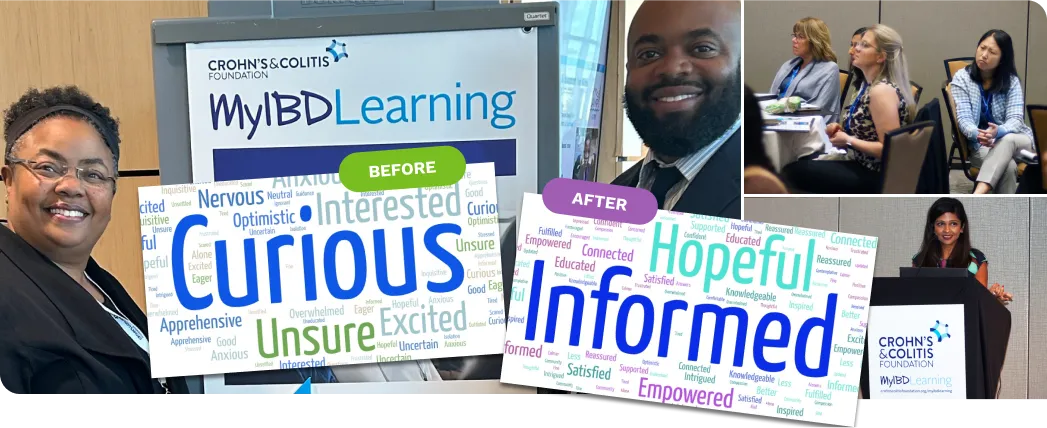

MyIBD Learning is our virtual and in-person education series developed to help people living with Crohn’s disease or ulcerative colitis and their caregivers feel informed, supported, and confident.
In the first half of 2025, thousands of individuals participated in either online or in-person programs covering topics from diet and medications to teen independence and long-term care. Pre- and post-surveys from this year reveal that participants are gaining vital knowledge about their condition and building the confidence to manage it: 92% increased their understanding of IBD.
At the end of the program, 61% reported high awareness about how to reach and stay in remission, 63% reported that they felt highly confident about their ability to manage their or their loved one’s health problems related to IBD, and 86% were very confident they could discuss with and ask questions of their healthcare professional about their IBD treatment plans and goals.
Understanding Very Early Onset IBD: A New Resource for Parents of the Youngest Patients
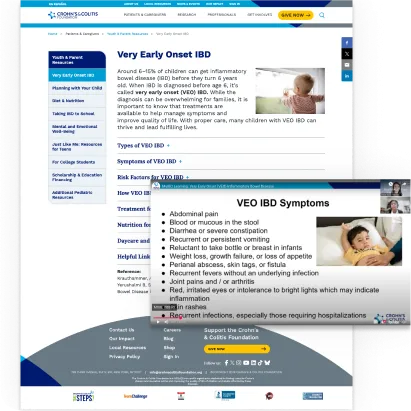
Parents of children under age 6 (when roughly 6-15% of pediatric IBD cases are diagnosed) now have a dedicated resource to help navigate Very Early Onset IBD (VEO IBD). The Foundation's new webpage explains how VEO IBD differs from IBD in older children—it’s often more severe, treatment-resistant, and tied to genetic or immune system factors—and with clear explanations, symptom checklists, and links to expert centers and advocacy groups, the page offers parents trusted, age-specific guidance. “We’re proud to help families understand what to expect and empower them to advocate for their child’s care from the very start,“ says Catherine Soto, Associate Vice President, Patient Education and Support.
From Isolation to Connection: The Power of IBD Support Groups

Through more than 100 support groups, the Foundation connects people living with IBD across the country (and the world) including Central and South America, Canada, Germany, and the United Kingdom. After COVID, 95% of groups transitioned to virtual meetings, making it even easier for people with IBD to find support.
But geography is only part of the picture. Our groups reflect the diversity of the IBD community—from adults to kids, caregivers to Spanish speakers, gender-specific to identity-based groups—ensuring everyone has a place to feel seen and supported.
Groups for people with ostomies or j-pouches provide a connection through shared experiences. Our IBD Kidz groups offer children with IBD a fun, supportive environment to build friendships and confidence. Spanish-language groups help people connect with others from similar cultural and linguistic backgrounds. The Queer with IBD groups (one for women and nonbinary individuals, another for gay and bi men) provide safe spaces to discuss dating, identity, and healthcare.
“I’ve felt less isolated in my experience because of this group,” says AJ, founder of the men’s Queer with IBD. group. “Meeting others who let you say, ‘Wow, I’m not the only one dealing with this,’ is the biggest takeaway.”
PATIENT PERSPECTIVE

“Leading IBD Kidz has shown me the healing power of community, especially among our youngest voices. Their resilience inspires my own and reminds me how courage can thrive even in the face of a lifelong, life-altering disease.”
~ Carly Menker, an IBD Kidz group facilitator
IBDAWARENESS
Celebrating the Volunteers Fueling Our Impact


Volunteers don’t just support the Crohn's & Colitis Foundation, they are the Foundation: their advocacy, empathy, dedication, and expertise change lives. This spring, we honored the tireless dedication of our volunteers during National Volunteer Week. From advocating for life-saving legislation to helping shape the Foundation’s research agenda, our volunteers fuel every area of our impact. Here are a few of the heights they helped us achieve in 2024:
Volunteers in Advocacy:
Over 20,000 advocates advanced policies around health insurance reform, restroom access, and other patient-focused issues.
Camp Oasis Support:
Nearly 1,000 young campers found community and confidence at Camp Oasis, thanks to devoted volunteer healthcare providers and counselors.
Fundraising for Breakthroughs:
Volunteers helped raise over $9 million through 59 Take Steps walks—driving research, education, and care forward.
Research Oversight:
Volunteer experts helped guide 299 active research projects, ensuring the Foundation’s work remains innovative and patient-centered.
Voices of IBD:
Eitan Tye, a longtime Camp Oasis counselor and volunteer, says, “Seeing my campers, whom I’ve known since they were young kids, become counselors, graduate college, go into the workforce—and then seeing their campers become counselors—everything coming full circle has been an unbelievable experience.”
Eitan's advice for other volunteers? “Take that first step. It can be a bit scary to put yourself out there, but it’s such an amazing community and a powerful experience.”
VOICES OF IBD

“Volunteering with Camp Oasis has been the most meaningful experience of my life: it inspired me to pursue a career in education. Using my challenges and experiences to help others has been profound.”
~ Eitan Tye, Camp Oasis counselor
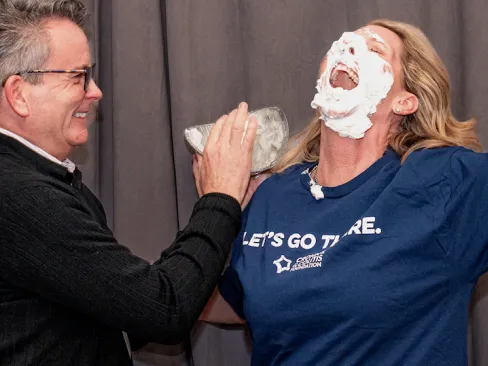
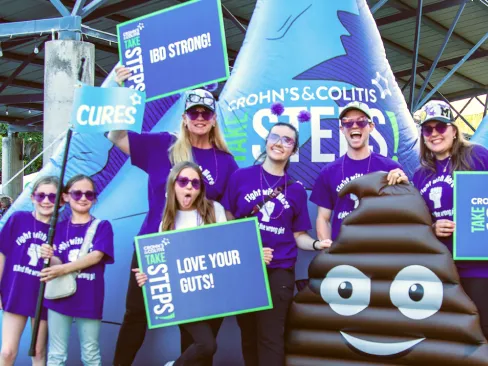
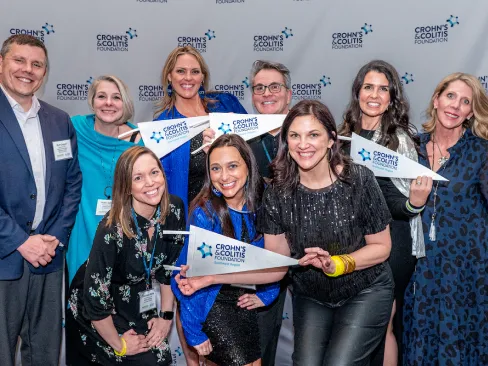
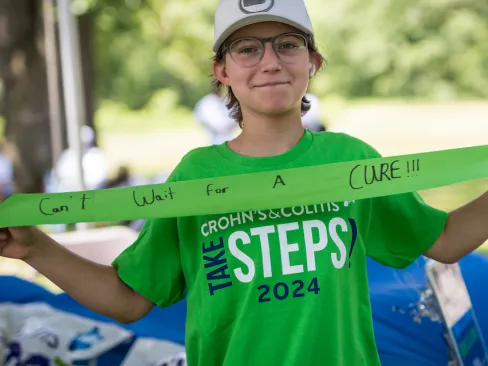
Faces of Impact: Where Passion Meets Action
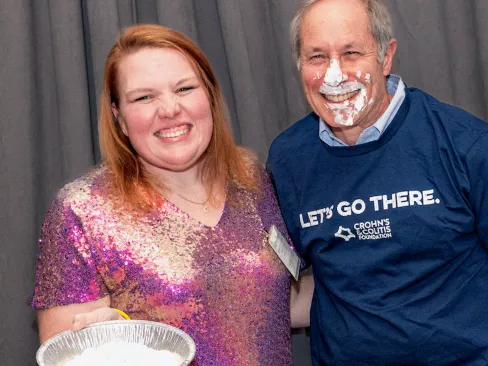
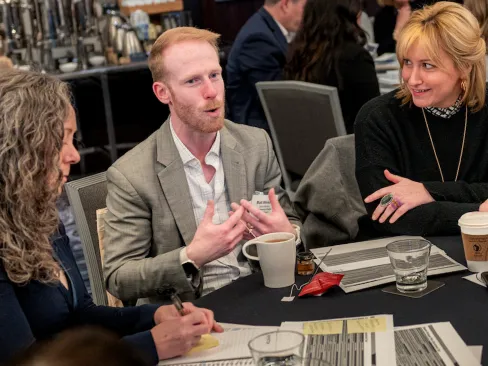
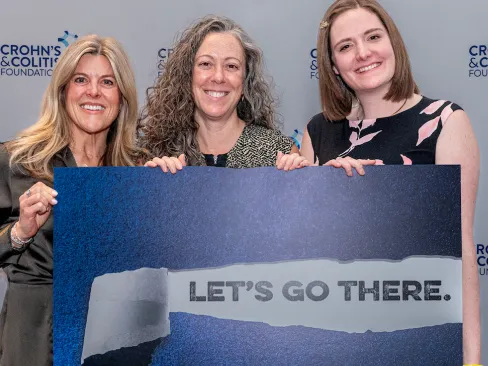
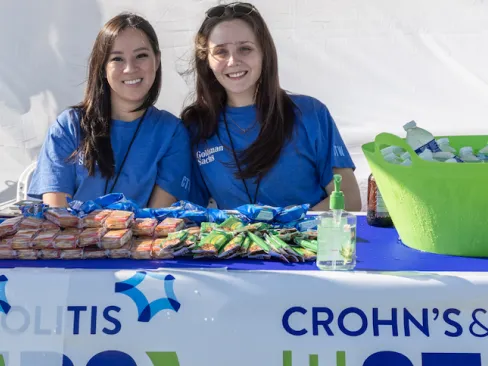
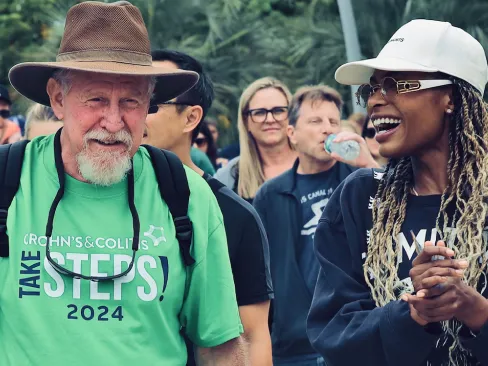
From pie-in-the-face laughs to Take Steps milestones, National Volunteer Week captured the energy, dedication, and joy our volunteers bring to the IBD community… every single day.
World IBD Day Reaches 6 Million
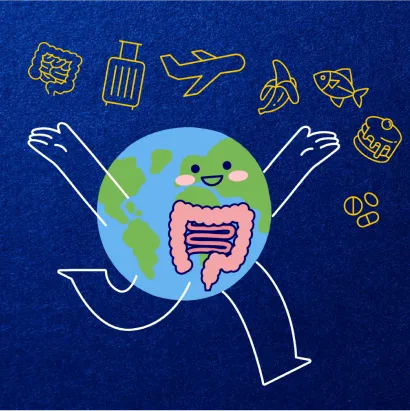
On May 19, people around the world united for World IBD Day, raising awareness for Crohn’s disease and ulcerative colitis. This year, our theme was Savoring Life with IBD, highlighting one of the community’s biggest hurdles: food and nutrition. From travel stress to what to eat, IBD affects so much more than digestion. To help, we launched the Global Gut Guide—a free resource with recipes, tools, and tips. With 6 million impressions and a $200K matching gift campaign, the day sparked bold conversations and reminded us that sharing our stories fosters strength, connection, and hope.
LET’S GO THERE
Danny Joseph: Sharing Strength Through Song
Diagnosed with Crohn’s disease in 2016, musician and The Voice finalist Danny Joseph is using his talent for more than music. In his heartfelt video for the Foundation’s Let’s Go There campaign, Danny reflects on finding strength through struggle, staying grounded in his passion, and breaking the silence around IBD. His story reminds us of the power of speaking up.
Do You Know Our Impact?

With gratitude to all of our supporters!
Many wonderful individuals and foundations have made important and significant contributions to the Crohn’s & Colitis Foundation in support of our mission programs. We are deeply grateful to them for their extraordinarily generous gifts.

Financials
The money the Foundation spends goes toward research, education, and support services.
