What You Need to Know: Federal Cuts and Executive Orders Threaten Progress in IBD
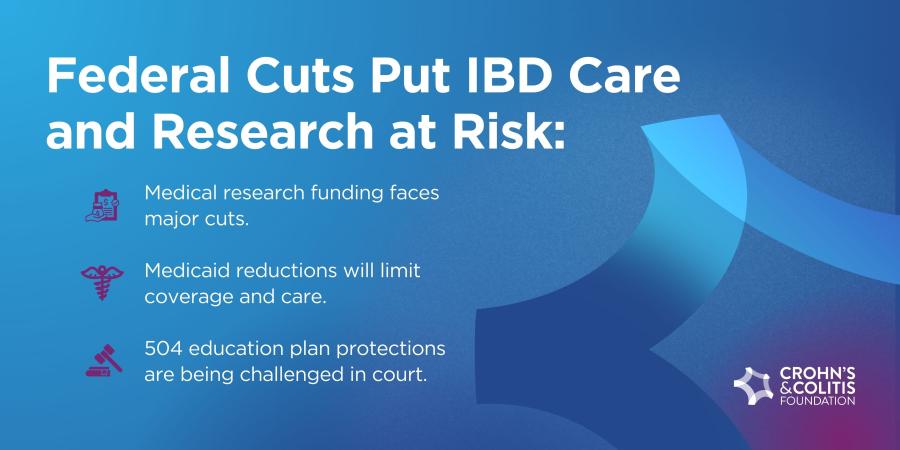
Federal funding cuts are not just numbers on a page - they represent a turning point that could halt life-changing research in IBD, erase years of scientific progress, and extinguish hope for patients and families desperate for new treatments. These proposed cuts carry devastating consequences for people living with Crohn’s disease and ulcerative colitis. [i]
The Impact on Medical Research
Recent federal budget proposals call for an unprecedented $18 billion cut to the National Institutes of Health (NIH), nearly 40% of its budget and the largest reduction in the agency’s history. In just a few months of 2025, nearly 700 NIH grants were terminated or delayed, resulting in $1.81 billion in lost funding. This has led to lab closures, the elimination of research positions, and the abandonment of critical studies and clinical trials—especially in the inflammatory bowel disease (IBD) research community, where promising discoveries are being left unfinished and momentum for breakthroughs is lost. [ii]
Surveys highlight the severity of recent NIH funding cuts. The Foundation's survey found:
- 42% of federally funded IBD researchers reported negative impacts from administrative changes.
- 62% expressed concern about continuing their work.
- Many researchers are now seeking non-government funding.
- Other countries are actively recruiting U.S. scientists.
The American Association for Cancer Research (AACR) reported:
- 45% of researchers lost access to fellowships.
- 55% saw colleagues leave the field.
- 25% experienced delays or cancellations of clinical trials.
These disruptions directly harm patients and families by halting clinical trials and delaying new therapies.[iii]
What You Can Do to Help
The loss of federal funding means fewer new treatments on the horizon, less support for ongoing care, and a slower path to cures for chronic diseases like Crohn’s disease and ulcerative colitis. For many, it means more years of pain and suffering. But we’re not giving up.
You can make a difference in the fight:
Join Our Advocacy Network: Help us urge Congress to protect federal funding for IBD research. Your voice matters- contact your representatives today.
Make a Donation: Your tax-deductible gift to the Crohn’s & Colitis Foundation directly supports critical research and patient programs.
Spread the Word: Share this information on social media and within your community to raise awareness about the urgent need for research funding.
Together, we can protect the future of IBD research and ensure that patients continue to receive the care and hope they deserve. Please check this page regularly for updates—your engagement is more critical now than ever before.
- Empowering Researchers: New Support and Resources from the Foundation

- We are providing free access to our IBD Plexus database for a number of academic researchers to help accelerate their projects.
- We have increased our flagship research awards by 13%. We’re also providing a comprehensive, consolidated list of IBD funding sources from the Foundation and other organizations for researchers.
- We are shortening our Foundation grant application timelines to get researchers the support they need faster.
- Access To Care at Risk
Millions of Americans—including many living with Crohn’s disease and ulcerative colitis—will be affected by recent changes to federal health insurance programs like Medicaid and the Affordable Care Act (ACA), as a result of legislation recently passed by Congress. These changes mean that people with chronic illnesses who rely on these programs for ongoing treatment may lose access to essential care and medications. As a result, thousands of IBD patients could face higher medical costs, delays in care, and a greater risk of complications, all of which can seriously impact their health and quality of life.
Over the next decade, it’s expected that about 17 million more Americans will become uninsured, with most of these losses affecting Medicaid recipients. [iv]Research shows that having Medicaid leads to much better access to care and preventive services than being uninsured.[v] For IBD patients, early diagnosis and timely treatment are key to avoiding complications and hospitalizations, making Medicaid coverage especially important. Starting in late 2026, new paperwork requirements may cause many people to lose their Medicaid coverage, while ACA enrollees could find it harder to reenroll starting this year, potentially increasing the risk of losing care. Additionally, those who remain on Medicaid may experience higher out-of-pocket costs for certain visits, including specialist appointments.
Recommended Actions
- Many people don’t realize their state health plan is actually Medicaid, just under a different name. If you’re unsure, ask your healthcare provider or look up your state’s Medicaid program online to confirm your coverage.
- If you or a loved one has health insurance through the Affordable Care Act, remember that starting this year automatic reenrollment is no longer available. Each year, you’ll need to re-verify your eligibility and manually reenroll during the open enrollment period, which will run November 1 – December 15.
- Court Challenges Endanger 504 Accommodations for IBD in School and Work
At the same time, challenges to 504 plans in courts put critical school accommodations for IBD patients—and similar protections for workers—in jeopardy. If these protections are weakened or eliminated, students with IBD could lose access to individualized support such as flexible schedules, bathroom passes, and modified assignments, making it harder to keep up academically while managing their disease. The erosion of 504 plan rights would create additional barriers for young people with IBD, threatening their educational success and overall well-being, and could also undermine reasonable accommodations in the workplace. [vi]
The Foundation is actively supporting volunteer advocates as they urge State Attorneys General to protect 504 plan accommodations. We are closely monitoring the ongoing court case and will keep our community informed of any major updates.
To make your voice heard, take action here: https://action.crohnscolitisfoundation.org/a/504-2025-sm
- References
[V] https://www.kff.org/medicaid/issue-brief/10-things-to-know-about-medicaid/
[VI] https://www.ed.gov/media/document/ocr-factsheet-inflammatory-bowel-disease-108820.pdf
Thank you to our sponsor for their support of this important project: