


Current Research Challenges

Deciding which research to prioritize is no easy feat. As the trusted leader in supporting patients and caregivers with Crohn’s disease and ulcerative colitis, the Foundation must ensure that we are funding research in areas with the greatest potential to improve patients’ lives. That’s where Challenges in IBD Research comes in.
Challenges in IBD Research, which is published every five years, is a report that outlines current knowledge gaps and helps us set the research agenda not only for the Foundation but for the IBD research community at large. Creating this document is a massive undertaking. To develop it, we ask for input from scientists from within and outside the IBD field: pediatric and adult gastroenterologists, surgeons and other clinicians, industry leaders, research leaders, and members of the Foundation’s National Scientific Advisory Committee (NSAC). Patients and caregivers are also included throughout this extensive process. Ultimately, five working groups, comprised of over 100 people and guided by a steering committee, worked on the most recent (2019) report for about a year. We are undergoing the same process now and plan to publish Challenges in IBD 2024 in early 2024.
Thanks to Challenges in IBD, we know exactly where the biggest gaps in research are and have a clear, strategic roadmap to guide our research investments. For Challenges in IBD, we prioritize research in the following five key categories.
Preclinical Research
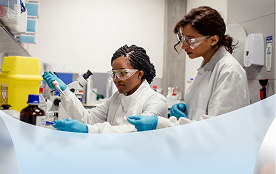
Before scientists can develop new treatments for IBD, they need to understand more about why it occurs and how it progresses. Laboratory research has the potential to answer key questions that set the stage for future studies involving patients. Challenges in IBD has identified the need to ensure that the laboratory research is closely tied to the disease in humans so that research findings will be relevant to what patients with Crohn’s and colitis are experiencing.
Environmental Triggers
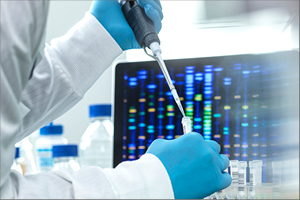
Not everyone with a genetic predisposition to IBD (increased likelihood to develop IBD based on genetic makeup) will develop it, which is why investigating the influence of environmental factors is so important. We need to know which environmental factors (such as stress, diet, viruses, pollutants and more) are most closely linked to disease onset and flares; that, in turn, might ultimately enable us to better treat or even prevent IBD.
Research on environmental triggers will also help us understand why IBD prevalence (number of people with IBD at a point in time) appears to be on the rise in certain ethnic groups and other countries.
Novel Technologies
In the not-too-distant future, you might be able to wear a bracelet that monitors gut health or have a fistula repaired via a non-invasive procedure that uses a unique medical-grade putty. These are just two of the innovative research projects we’re supporting that have the potential to change how IBD is diagnosed, monitored, and treated.
Clinical Research in Real-World Settings
Traditional clinical trial enrollment can be challenging and time consuming, and many patients end up being excluded due to highly specific criteria. In some instances, studies done in real-world settings (also called pragmatic studies) make it easier to get information faster and more efficiently. These types of studies also enable physician-scientists to weave research into their everyday work.
Precision Medicine
Give two IBD patients the same medication and you might end up with two very different outcomes. We don’t know why a given drug might work well for one patient and not another, but we’re determined to find out. Step one: We need to identify genetic variations or other biological characteristics, that can be used to help match each patient to the best treatment for them.