




What is an ostomy?
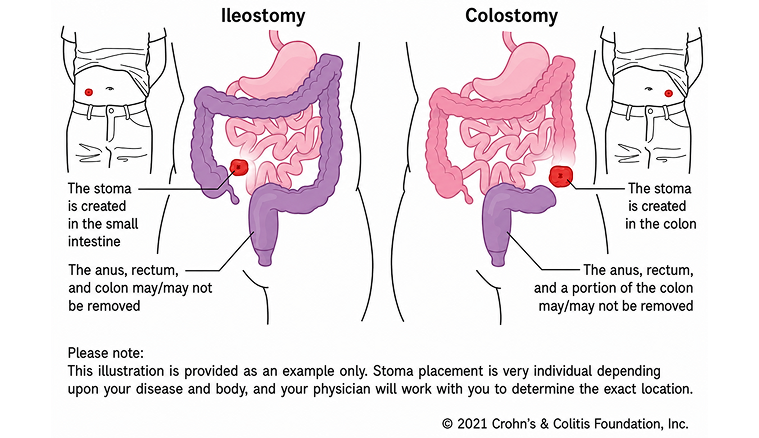
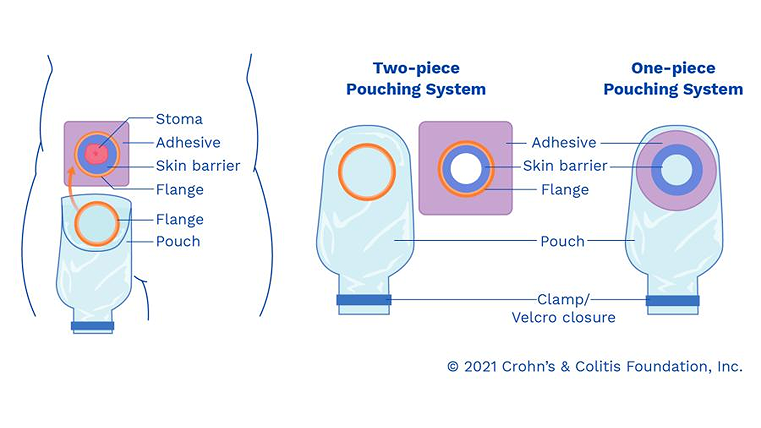
Ostomy surgery is a procedure that creates a surgically made opening in the body, called a stoma, to allow stool to pass out of the body. The stoma is the end of the intestine (small or large intestine) that is brought through the abdominal wall, creating an opening where waste can exit. The waste is then collected in an external ostomy pouch (also called an appliance or bag) that is securely attached to the skin on the outside of the abdomen.
There are two common types of ostomies for people with IBD, named based on the part of the intestine used to create the stoma. An ileostomy is created from the ileum, which is the last part of the small intestine. A colostomy is created from the colon, which is the large intestine. An ostomy may be temporary or permanent depending on your individual health needs and surgical plan. While recovery experiences vary, your healthcare team will provide guidance and support throughout the healing process.
Your ostomy care team
Before and after ostomy surgery, you will have an ostomy care team to help you learn how to care for your ostomy and adjust to life with an ostomy. Your team may include your gastroenterologist, surgeon, and healthcare professionals who specialize in ostomy care.
An Ostomy Management Specialist (OMS) is a healthcare professional who has completed board certification in ostomy management. Wound, Ostomy, and Continence (WOC) nurses specialize in caring for people with wounds, ostomies, and conditions affecting bladder and bowel function. These specialists work alongside your healthcare team to provide education, answer your questions, teach you how to manage your ostomy, and help you understand the supplies you or your child may need.
What to expect after ostomy surgery
It’s important to talk with your healthcare team about what you can expect after ostomy surgery. In the days and weeks following surgery, some people may experience a higher amount of stool and fluid that passes through your stoma (known as ostomy output). The output can reach up to 1.5 liters per day but over time, output typically decreases as the ileum adapts and begins to absorb more fluid and electrolytes that were previously absorbed by the colon.
Staying hydrated is an important part of recovery, as dehydration is one of the most common reasons people with an ostomy may need additional medical care. Drinking rehydration fluids that contain sodium, glucose, and amino acids can help support hydration.
Always contact your doctor if you notice a sudden decrease in output, have concerns about a possible blockage, or experience pain or a new bulge around your stoma.
Recovering from ostomy surgery takes time, so be patient with your progress.

Joel’s story
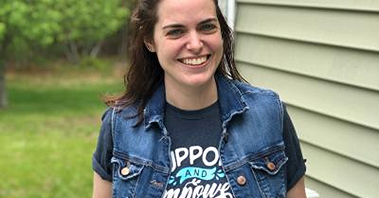
“Living with Crohn’s disease and an ostomy has taught me that I can’t do everything — but I can do the things that matter most if I plan for them. I look ahead at my schedule, prioritize what’s important, and build in rest and backup plans. It’s not about missing out — it’s about protecting your energy so you can show up fully for the moments that count.”
Joel Nixon
Living with Crohn’s disease
Caring for your ostomy
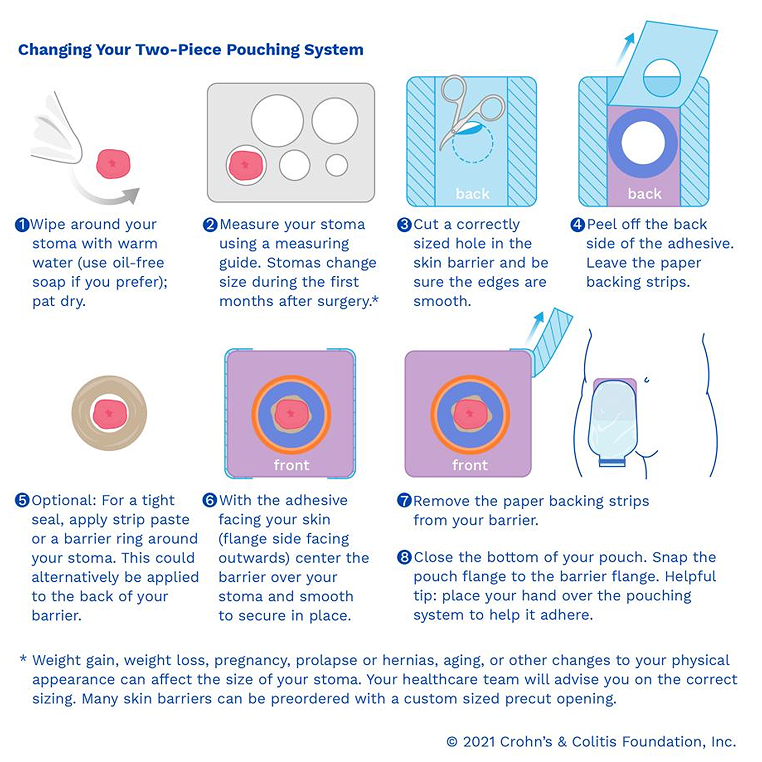
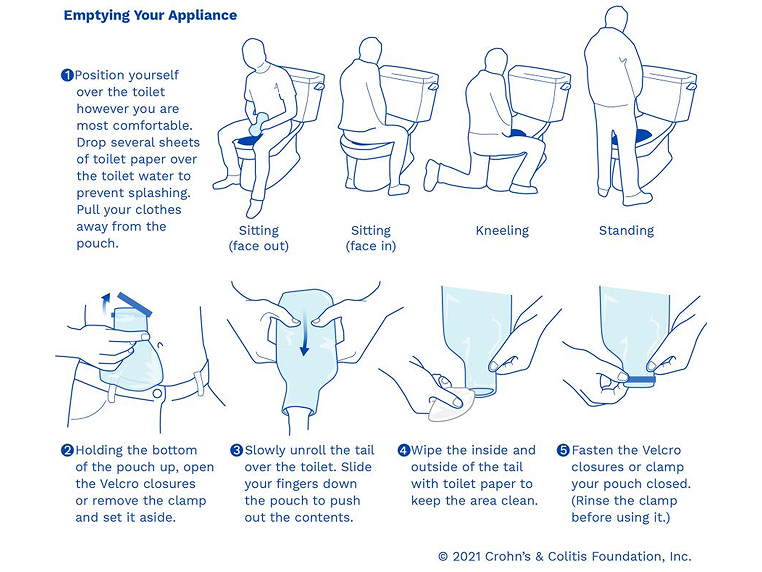
After ostomy surgery, you will work with your care team to learn how to care for your ostomy. This will include understanding how to change your ostomy appliance, care for the skin around your stoma, avoid leaks, manage your output, manage odor, and more.
- Changing your appliance
- Skin care
- Avoiding leaks
- Managing high output
- Odor control
Living with an ostomy
Adjusting to your new normal - life with an ostomy - will take some time. You will likely notice a drastic improvement in how you feel immediately, but it's important that you take time to learn your new body and the adjustments you need to make in your daily life.
Thank you to our content reviewers and contributors: George Salamy, Richard Rood, MD, and The Crohn’s & Colitis Foundation’s Ostomy Workgroup
- Eating
- Clothing
- Bathing and showering
- Exercise and sports
- Intimacy
- Fertility, pregnancy and delivery
- At the workplace
- Child and caregiver tips
- College students
IBD Help Center
Get personal answers from our knowledgeable Information Specialists. Leave us a message 24/7 and we'll call you back. Chat is available Monday: 9:00 a.m. – 5:00 p.m. and Tuesday, Thursday: 9:00 a.m. – 9:00 p.m. EST.
-

Give Us A Call
1-888-MY-GUT-PAIN -

Connect with Email
Send us an Email -

Help Center Page
Visit web page