



What It Takes: Lessons From the IBD Community
Published: November 18, 2026
Crohn’s & Colitis Awareness Week: What It Takes to Live With IBD
Living with Crohn’s disease or ulcerative colitis can mean navigating challenges that others may not see. From managing symptoms at work to adjusting family plans, traveling with confidence, or navigating relationships, inflammatory bowel disease (IBD) can affect nearly every part of daily life.
During Crohn’s & Colitis Awareness Week (December 1-7), the Crohn’s & Colitis Foundation is highlighting this reality through the theme “What It Takes.” Because what it takes to live with IBD looks different for everyone—and no one should have to navigate it alone.
The Foundation’s What It Takes handbook features real stories from the IBD community alongside expert tips for coping with the disease. Behind every milestone is a story, and behind every story are lessons that can help others feel understood, find support, and move forward on their own terms.
What It Takes: Lessons From the IBD Community
Living with IBD often requires planning, flexibility, support, and self-advocacy. There is no single path forward, but the experiences of others can offer encouragement and perspective.
Making Room for Goals
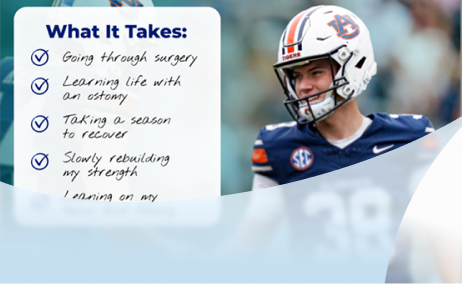
After undergoing ostomy surgery and missing the 2024 season, Auburn University football kicker Alex McPherson faced a long road back to the field. Determined to return to the sport he loves, he worked through recovery, gradually rebuilt his strength, and pushed toward his goal with support from his medical team, coaches, teammates, athletic staff, and family. Even a Crohn’s disease diagnosis the following summer couldn’t keep him from pursuing that goal. After finding a treatment that helped control his symptoms, Alex returned to the field for the 2025 season—a testament to his determination and the power of a strong support system.

Finding What Works for Your Body
Registered dietitian and National Scientific Advisory Committee (NSAC) member Rachel Dyckman shares how living with ulcerative colitis shaped her approach to nutrition and helping others find foods they can tolerate. Her experience is a reminder that managing IBD-related nutrition needs is personal, and what works for one person may not work for another.
Planning for the Unexpected
Musician and Foundation social media ambassador Saxl Rose works with his doctor to schedule infusions around touring. His story shows how planning ahead and adapting when circumstances change can help people with IBD continue doing what they love.
“People may see me onstage, or in the studio, but they don’t always see the treatments, planning, doctor visits and the hard days behind it. Sharing my story and connecting with other people living with IBD means the world to me. If it helps someone feel a little less alone or share their health journey, I’m glad I shared it.” - Saxl Rose
These stories look different, but they share an important message: managing IBD involves more than medical treatment alone. Finding support, adapting to changing needs, and making space for yourself all matter.
Explore More Stories and Get Involved
This Crohn’s & Colitis Awareness Week, discover the stories, support, and resources that bring the IBD community together. Explore the What It Takes handbook and find a way to make a difference.
DOWNLOAD the What It Takes Handbook
What It Takes to Find Support When Living With IBD
You don’t have to figure everything out on your own. Whether you’re newly diagnosed or have been living with IBD for years, there are ways to find support that meet you where you are.
Here are a few places to start:
- Talk with your care team. Discuss symptoms, pain, fatigue, and concerns about returning to activities or managing everyday responsibilities. Your healthcare team can help you explore options based on your needs.
- Find strategies that work for you. Explore resources on mental health and emotional wellness and nutrition to learn about approaches that may support your well-being.
- Connect with others. Sharing experiences with people who understand IBD can help you feel less alone, challenge stigma, and find encouragement along the way.
Expert Tip:
“Community becomes important when you’re facing a challenge. That’s because connection, whether that’s an emotional bond or sharing a laugh, releases hormones that buffer you against the impact of stress.” - Laurie Keefer, PhD, GI Psychologist and Director of Psychobehavioral Research within the Division of Gastroenterology at Mount Sinai.
What It Takes to Raise IBD Awareness and Make a Difference
Awareness can lead to connection, advocacy, and meaningful change. This Crohn’s & Colitis Awareness Week, consider taking one action that feels right for you.
- Support the mission. Donate to help advance research, education, resources, and support for people affected by IBD.
- Share your story. Help others understand what living with IBD really takes. Your experience may help someone feel seen and remind them they aren’t alone. Use our form to share your story with the Foundation’s community.
- Speak up for the IBD community. Join the Foundation’s Advocacy Network to support policies that affect research, access to care, and people living with IBD.
Everyone has a different capacity to participate. Even small actions can help build awareness and strengthen the IBD community.
Together We Have What It Takes
There is no single experience of IBD and no one-size-fits-all path forward. But every story shared, connection made, and action taken can help create a community where people feel understood and supported.
Together, we can help ensure that no one has to face IBD alone.
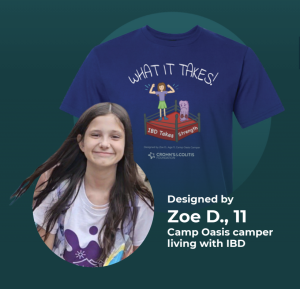
Fuel What It Takes
Donate $50+ by December 7 and receive this year's exclusive Awareness Week T-shirt, designed by Zoe D., an 11-year-old Camp Oasis camper living with IBD. Plus, gifts to this campaign made by December 31, 2026, will be matched up to a total of $500,000. Every gift fuels research, resources, and support for people with IBD.